

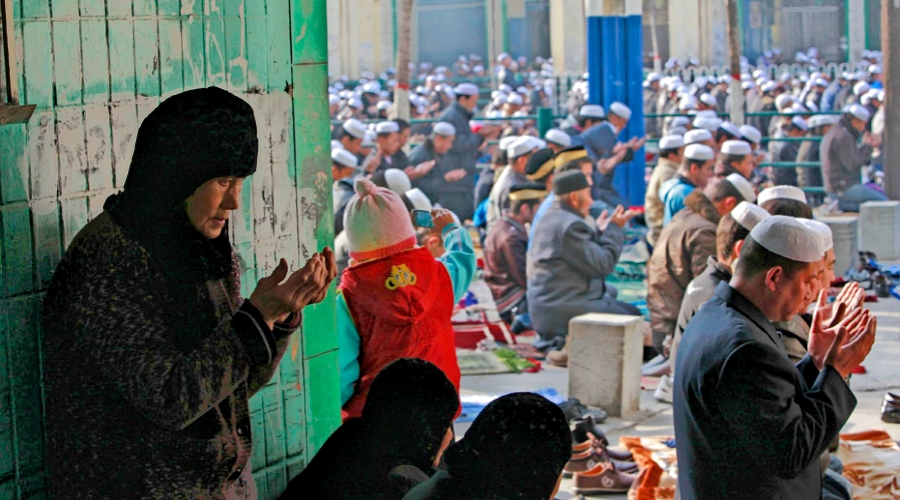
China is home to a diverse Muslim population, but two of the most well-known groups are the Hui Muslims and the Uyghur Muslims. Both follow Islam, yet they differ greatly in ethnic origin, language, geography, culture, and historical development.
This article provides a clear, structured comparison of Hui Muslims vs Uyghur Muslims, optimized for cultural, historical, and travel research.
Ethnic Origins
Uyghur Muslims
The Uyghur Muslims are a Turkic ethnic group with deep historical roots in Central Asia and Northwest China. Their origins trace back to the ancient Uyghur Khaganate (8th–9th century), which once existed in the Mongolian steppe.
After the collapse of the khaganate, Uyghur ancestors migrated to the Tarim Basin in modern Xinjiang, where they gradually merged with local Indo-European oasis populations and other Central Asian groups. Over centuries, this created a distinct ethnic identity closely tied to the Silk Road.
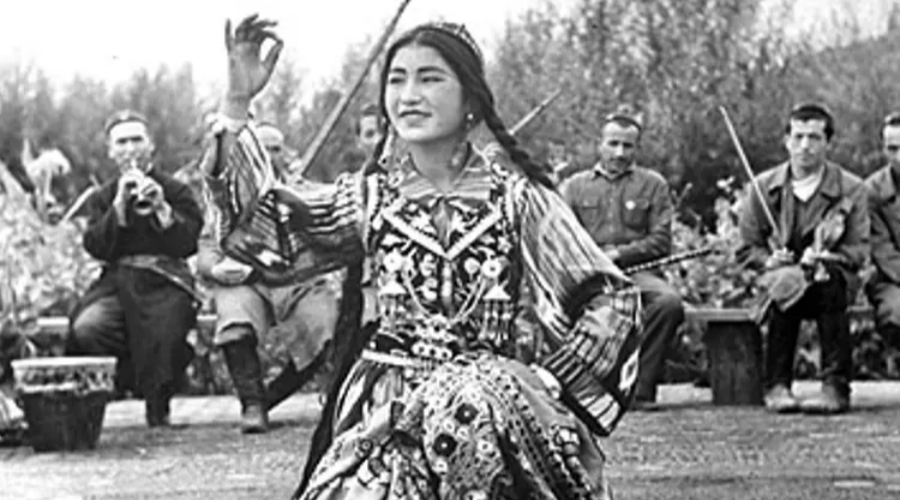
A Uyghur dancer performs to music in Xinjiang, China, on January 1, 1943.
Today, Uyghur Muslims are considered one of the indigenous ethnic groups of Xinjiang, with a strong Central Asian cultural foundation.
Hui Muslims
In contrast, Hui Muslims developed within inland China over many centuries. Their origins date back to the Tang, Song, and Yuan dynasties, when Arab and Persian Muslim merchants, soldiers, and scholars arrived in China via the Silk Road.
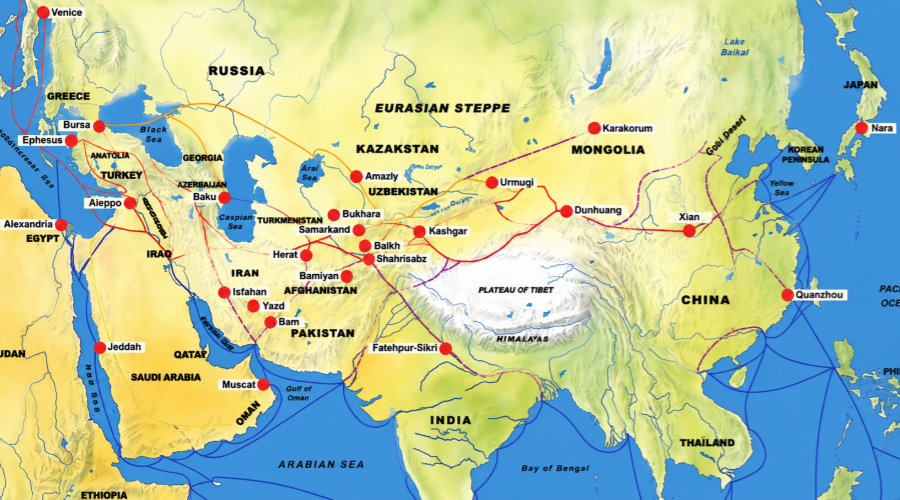
Eurasian Connection via the Silk Road
These foreign Muslims gradually intermarried with Han Chinese, Mongols, and other groups, adopting Chinese surnames, language, and cultural practices while maintaining Islamic faith. Over time, the Hui became a uniquely Chinese Muslim ethnic group.
Unlike Uyghur Muslims, the Hui have no single geographic homeland or Turkic ancestry, and their identity is defined primarily by religion rather than language or region.
Language: Mandarin vs Turkic Uyghur
Uyghur Muslims
The Uyghur Muslims speak the Uyghur language, a Turkic language closely related to Uzbek and other Central Asian languages. It is written in an Arabic-based script and used in education, media, and religious life in Xinjiang.
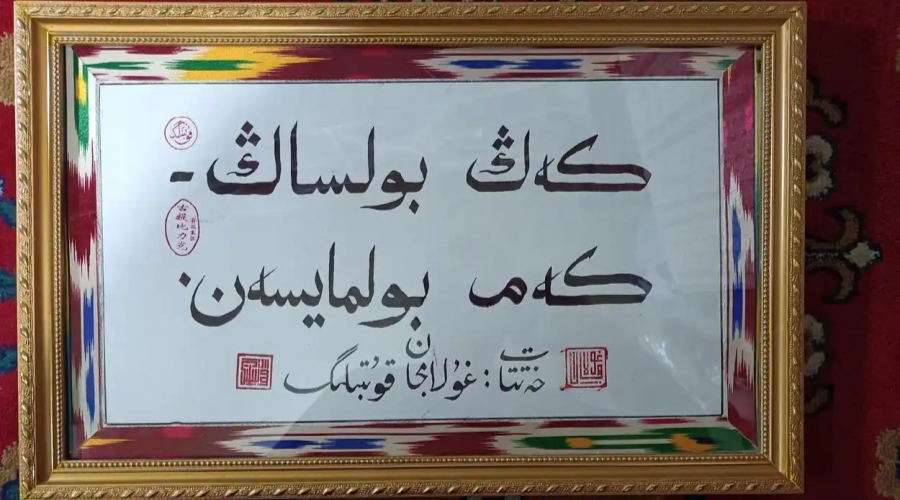
A Uyghur calligraphy artwork
Language plays a central role in Uyghur identity, reinforcing cultural continuity across generations.
Hui Muslims
The Hui Muslims speak Mandarin Chinese or local Chinese dialects. There is no separate Hui language. Instead, Arabic and Persian terms are used mainly in religious contexts such as prayer or Quranic recitation.
This linguistic difference is one of the most important distinctions between Hui Muslims and Uyghur Muslims.
Geographic Distribution: Concentrated vs Nationwide
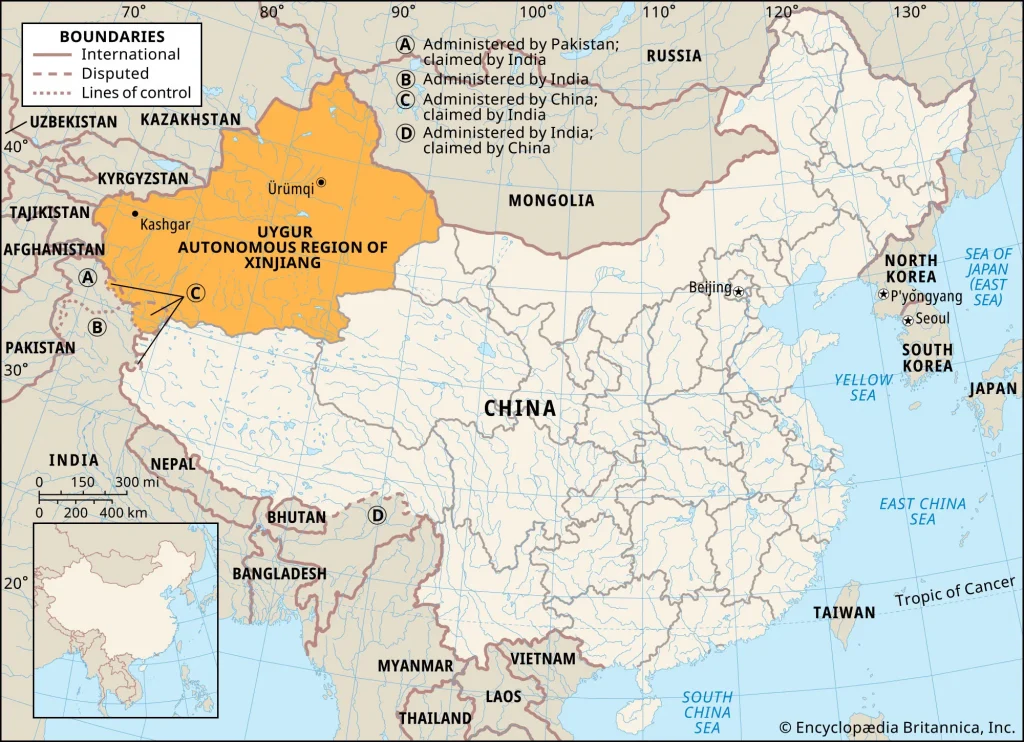
Map of Uyghur Autonomous Region of Xinjiang, China
Uyghur Muslims in Xinjiang
The vast majority of Uyghur Muslims live in the Xinjiang Uyghur Autonomous Region, particularly in southern cities such as Kashgar, Hotan, and Turpan. Their communities are highly concentrated and form the dominant population in many oasis towns.
Hui Muslims Across China
In contrast, Hui Muslims are widely distributed across China. Significant Hui communities exist in:
- Ningxia Hui Autonomous Region
- Gansu and Qinghai provinces
- Yunnan and Henan provinces
- Major cities like Beijing, Xi’an, and Shanghai
This “scattered nationwide distribution” makes the Hui one of the most geographically widespread Muslim groups in the world.
Culture and Lifestyle Differences
Uyghur Muslim Culture
The culture of Uyghur Muslims reflects strong Central Asian influence:
- Music: Traditional Twelve Muqam(UNESCO-listed)
- Dance: Energetic folk dances performed in public celebrations
- Clothing: Colorful embroidered dresses, doppa skullcaps
- Social life: Active bazaar culture and community gatherings
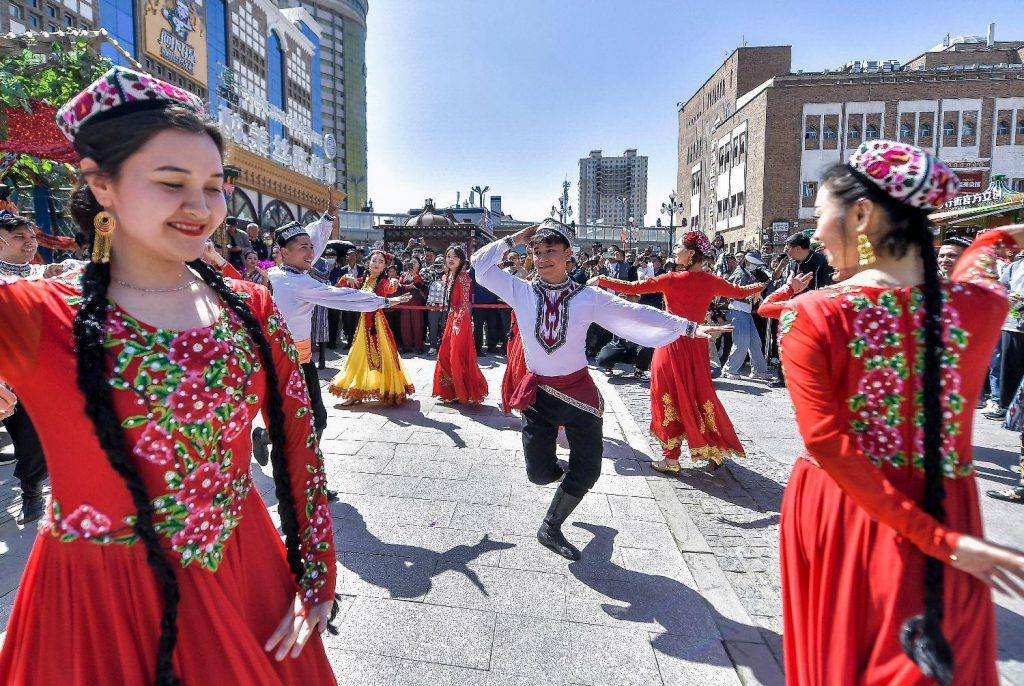
a festive Uyghur wedding
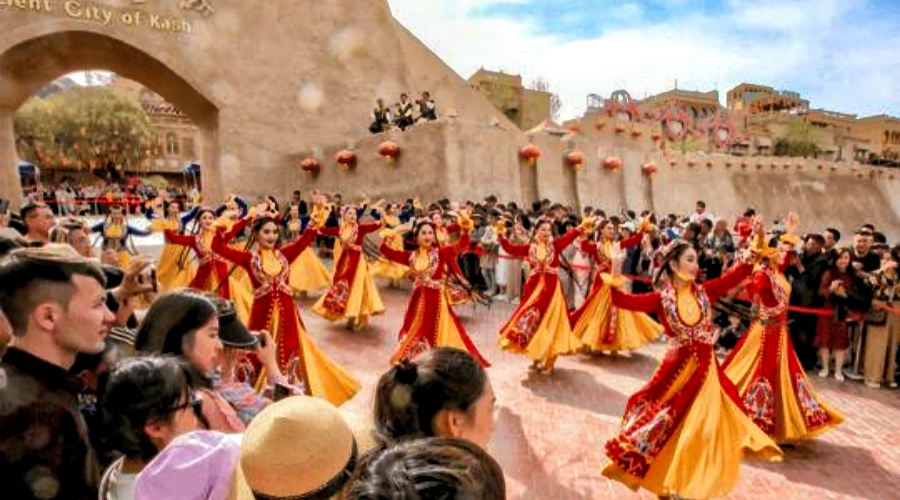
Uyghur ethnic group celebrating in Kashgar Old City, Xinjiang, with song and dance performances
Uyghur culture remains visually and socially distinct within China due to its Silk Road heritage.
Hui Muslim Culture
Hui Muslims, on the other hand, are more integrated into broader Chinese culture:
- Architecture: Chinese-style mosques with pagoda roofs
- Clothing: Everyday dress similar to Han Chinese
- Culture: Islamic traditions combined with regional Chinese customs
- Social identity: Strong integration into local Chinese communities
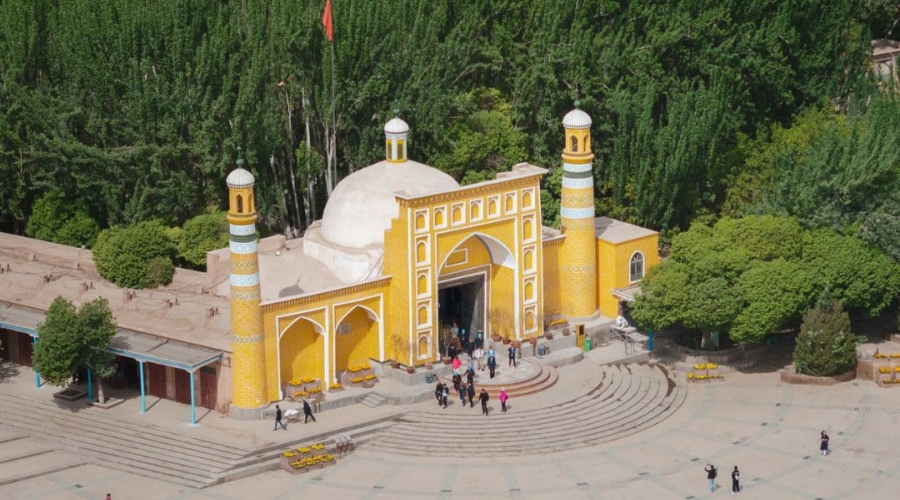
Id Kah Mosque in Kashgar
Despite cultural integration, Hui Muslims continue to observe Islamic dietary and religious practices.
Cuisine: Halal Traditions with Different Influences
Food culture clearly highlights the difference between Hui Muslims and Uyghur Muslims.
Uyghur Muslim Cuisine
Uyghur food is strongly influenced by Central Asian traditions:
- Lamb skewers (kebab)
- Hand-pulled noodles (laghman)
- Pilaf (polo)
- Naan bread
- Dried fruits and dairy-based drinks
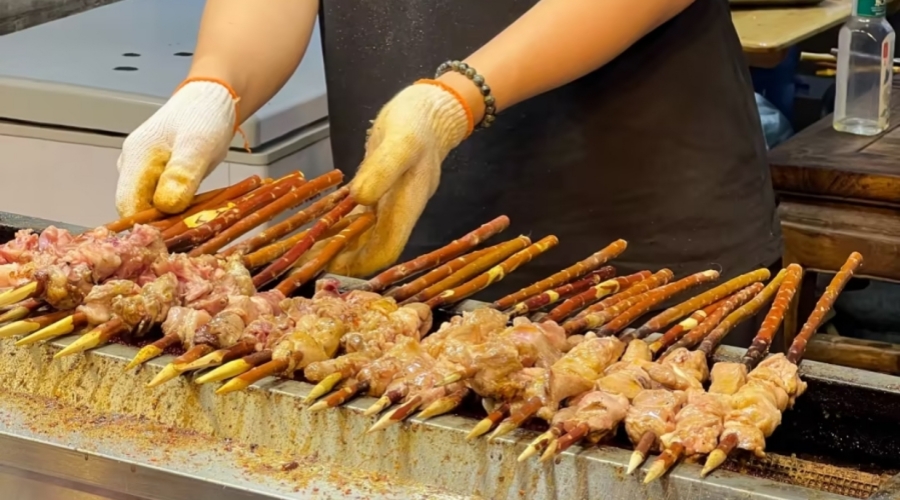
Xinjiang lamb skewers grilled over red willow branches
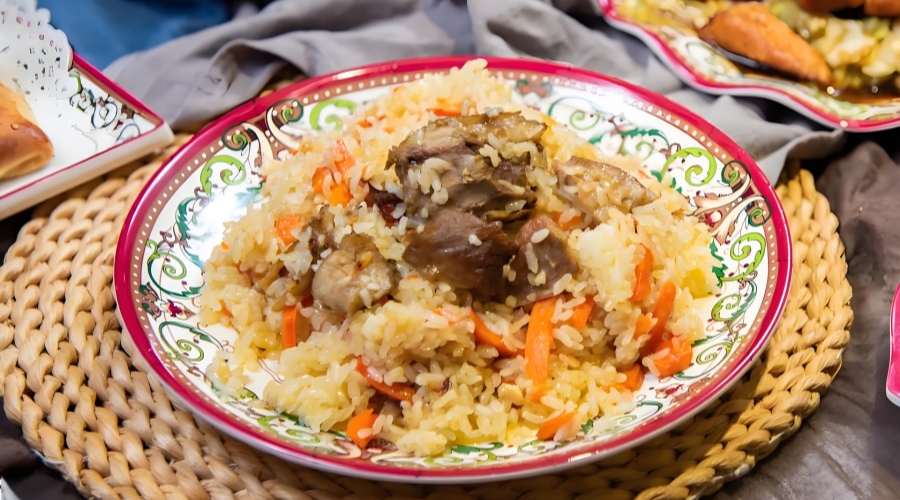
Xinjiang Pilaf
Meals are rich, meat-heavy, and closely tied to Silk Road culinary heritage.
Hui Muslim Cuisine
Hui cuisine is more closely connected to Chinese cooking styles while remaining halal:
- Lanzhou beef noodles
- Lamb soup and dumplings
- Halal versions of Chinese pastries
- Regional adaptations of northern and southern Chinese dishes
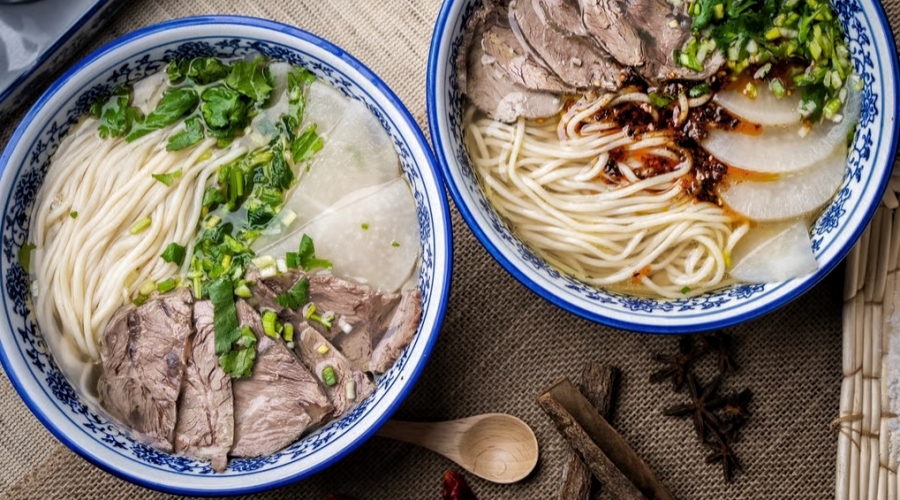
Lanzhou Beef Noodles
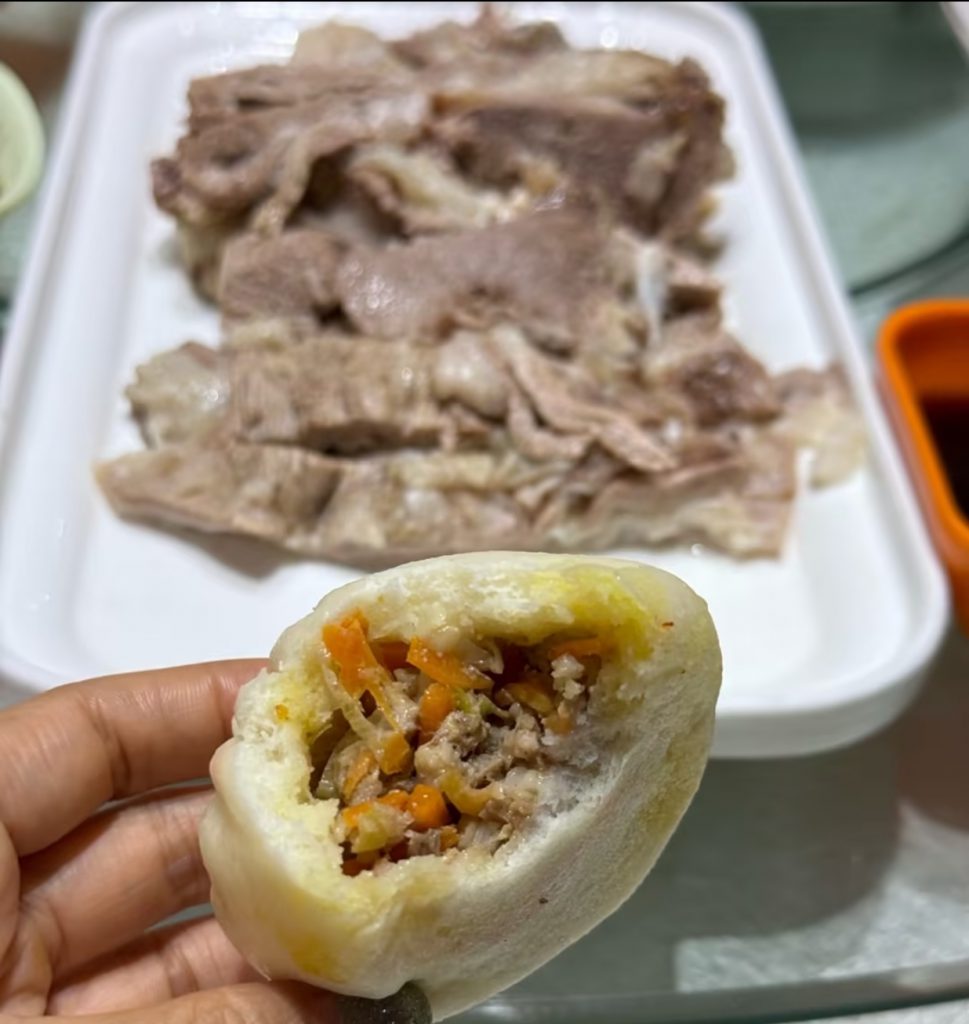
Ningxia-style carrot and lamb stuffed buns and hand-pulled lamb
This fusion makes Hui cuisine one of the most diverse halal food traditions in China.
Religion and Islamic Practice
Both Hui Muslims and Uyghur Muslims follow Sunni Islam and observe key religious practices such as:
- Daily prayers (Salah)
- Ramadan fasting
- Eid al-Fitr and Eid al-Adha
- Halal dietary laws
However, there are differences in religious expression:
Uyghur Muslims
- Strong Sufi cultural influence in parts of Xinjiang
- Religious life often includes local shrine traditions
- Eid celebrations include public music, dance, and bazaar activities
Hui Muslims
- More scriptural and mosque-centered religious practice
- Islamic teachings delivered in Mandarin
- Eid celebrations are more family- and mosque-focused
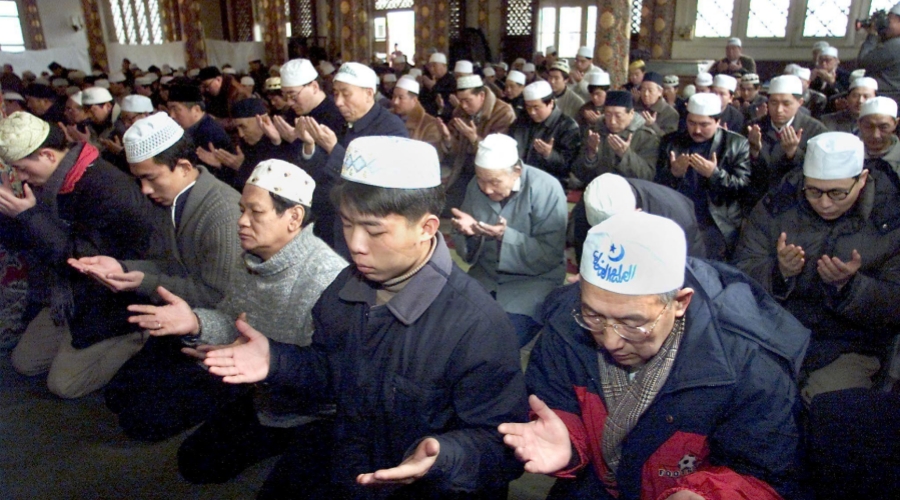
Hui Muslims in China are praying
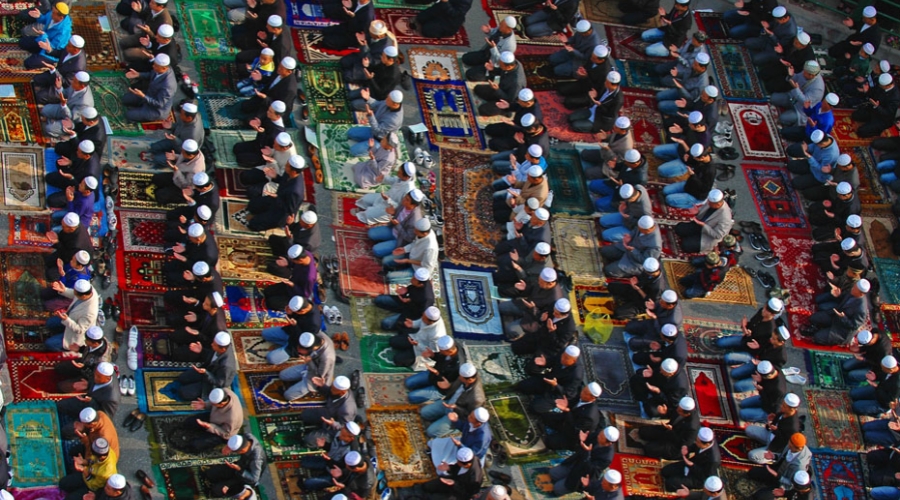
Muslim worshippers attending Eid al-Fitr congregational prayer at a mosque in Xining, Qinghai
Despite differences, both groups share core Islamic beliefs and practices.
Key Identity Difference: Ethnicity vs Religion-Based Identity
The most important distinction between Hui Muslims and Uyghur Muslims is how identity is formed:
- Uyghur Muslims → Ethnic identity + language + regional homeland + Islam
- Hui Muslims → Religion-based identity integrated into Chinese ethnicity and language
In simple terms:
- Uyghur identity is deeply ethno-linguistic and regional
- Hui identity is primarily religious within a Chinese cultural framework
While both Hui Muslims and Uyghur Muslims in China share the Islamic faith, they represent two very different historical and cultural trajectories.
- Uyghur Muslims are a Turkic-speaking, Central Asian-rooted ethnic group concentrated in Xinjiang.
- Hui Muslims are Mandarin-speaking Muslims spread across China, shaped by centuries of cultural integration.
Together, they reflect the rich diversity of Islam in China and the long historical influence of the Silk Road.