

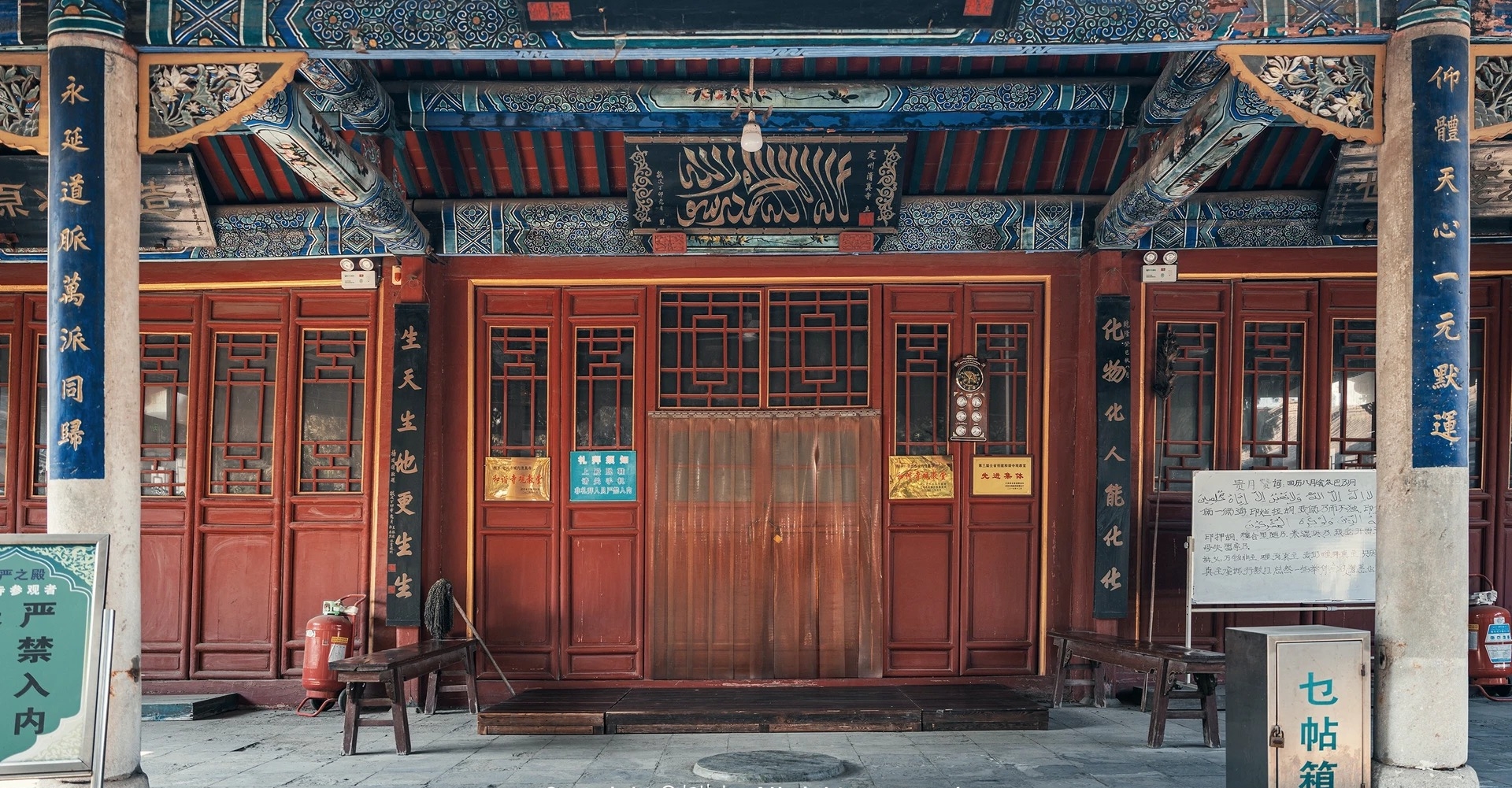
Is It Possible to Visit Mosques During a China Trip?
Yes, it is possible to include mosque visits in a China trip.
China has a long history of Islamic culture dating back more than 1,300 years, and mosques can be found in many cities, especially those connected with the ancient Silk Road and regions with large Muslim communities.
However, visiting mosques in China may be different from visiting mosques in some Muslim-majority countries. Some mosques welcome foreign visitors, while others mainly serve local worshippers and may have specific visiting arrangements. Planning ahead is recommended, especially for travelers who want to visit during prayer times or join religious activities.
The Unique Blend of Islamic and Chinese Architecture
A primary highlight of visiting mosques in China is the distinctive architectural style. Unlike the sprawling domes and minarets common in the Middle East, many Chinese mosques feature a unique combination of Islamic elements and traditional Chinese architecture, with features such as upturned eaves, intricate woodwork, courtyards and tiled roofs. Inside, however, visitors can discover serene prayer halls, Arabic calligraphy, and geometric Islamic art.
Top Cities for Mosque Visits on a Standard Itinerary
Adding a mosque visit to a standard travel route requires minimal planning, as many mosques are located in major cities with established Muslim communities, rich Islamic heritage, and a long history of cultural exchange.
Xi’an: The Best Place to Experience Ancient Islamic Heritage
Xi’an was the starting point of the ancient Silk Road and one of the earliest cities where Islam arrived in China.
The most famous mosque in Xi’an is the Great Mosque of Xi'an, located in the historic Muslim Street. Built during the Tang Dynasty and expanded over many centuries, it is one of the oldest mosques in China.
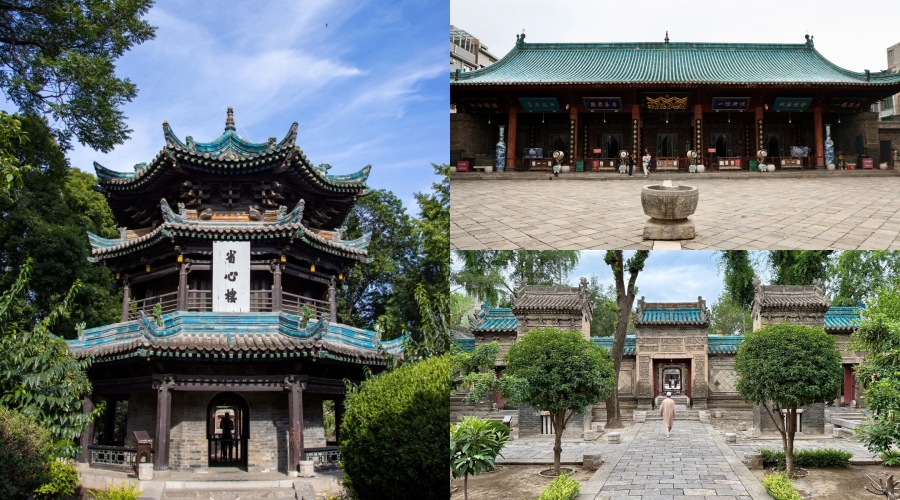
the Great Mosque of Xi'an
The Great Mosque of Xi’an combines Islamic religious design with Chinese courtyard architecture. Visitors can walk through peaceful gardens and view traditional buildings.
Xi’an is also convenient for travelers because the surrounding Muslim Street has many halal restaurants and shops, making it easy to combine a mosque visit with local food experiences.
Beijing: Historic Mosques in China’s Capital
Beijing has several historic mosques that reflect the long presence of Muslim communities in northern China.
The Niujie Mosque is the most famous mosque in Beijing and one of the oldest Islamic buildings in the city. Located in the Niujie area, it has served the local Muslim community for centuries.

Niujie Mosque in Beijing
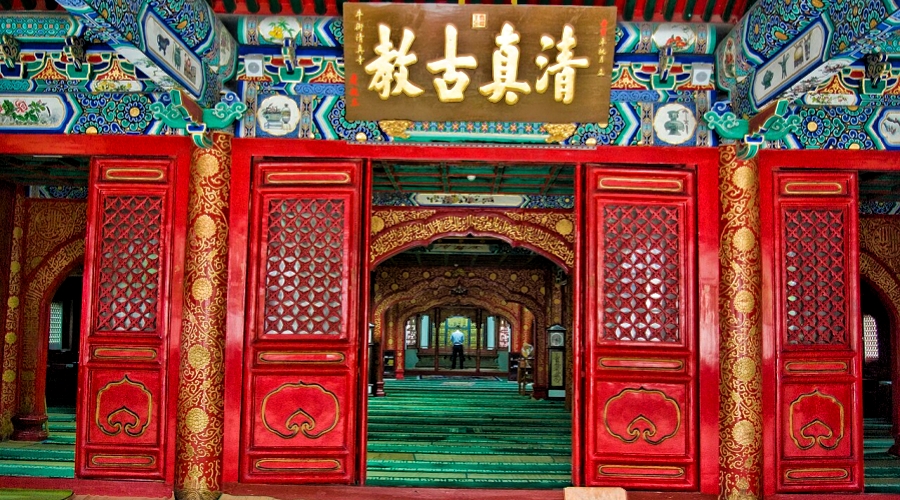
Niujie Mosque prayer hall in Beijing, originally built in 996 (Liao Dynasty), and rebuilt in 1443 (Ming Dynasty)
The mosque features a traditional Chinese architectural style while maintaining Islamic religious functions. The surrounding neighborhood is also known for halal food and Muslim cultural traditions, making it a convenient stop for visitors interested in China’s Islamic heritage.
Lanzhou: A Silk Road City with Strong Muslim Culture
Lanzhou, located along the Yellow River and the ancient Silk Road route, has one of the largest Muslim communities in China.
The Xiguan Mosque is one of the city’s most recognizable mosques. Its location in central Lanzhou makes it relatively easy for travelers to visit while exploring the city.
Lanzhou is also famous for handmade beef noodles, making it an excellent destination for travelers who want to experience both Muslim cuisine and local Islamic culture.
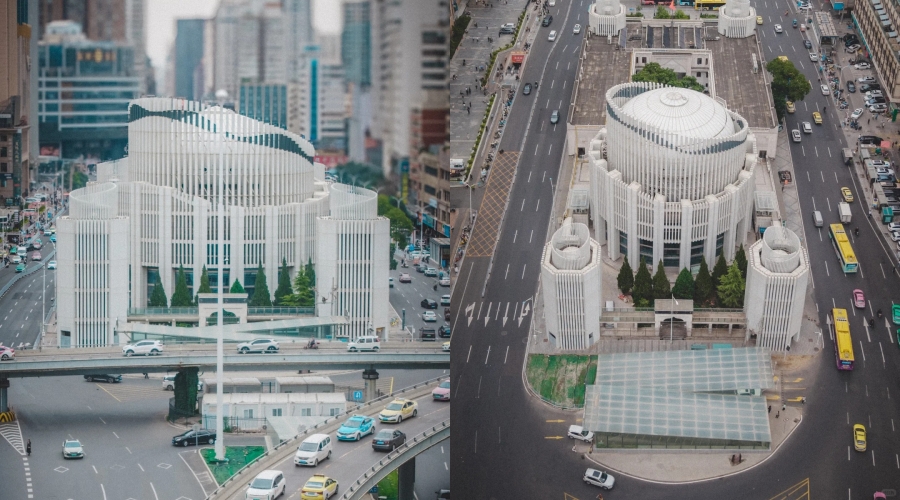
Xiguan Mosque in Lanzhou, Gansu
Xinjiang: A Region with Deep Islamic Traditions
Xinjiang has a long Islamic history and is home to many Muslim communities, especially among the Uyghur population. Cities such as Kashgar, Turpan, and Urumqi have many mosques and Islamic cultural sites.
The Id Kah Mosque is one of the largest and most famous mosques in Xinjiang. Located in the center of Kashgar’s old city area, it has been an important religious and cultural landmark for centuries.
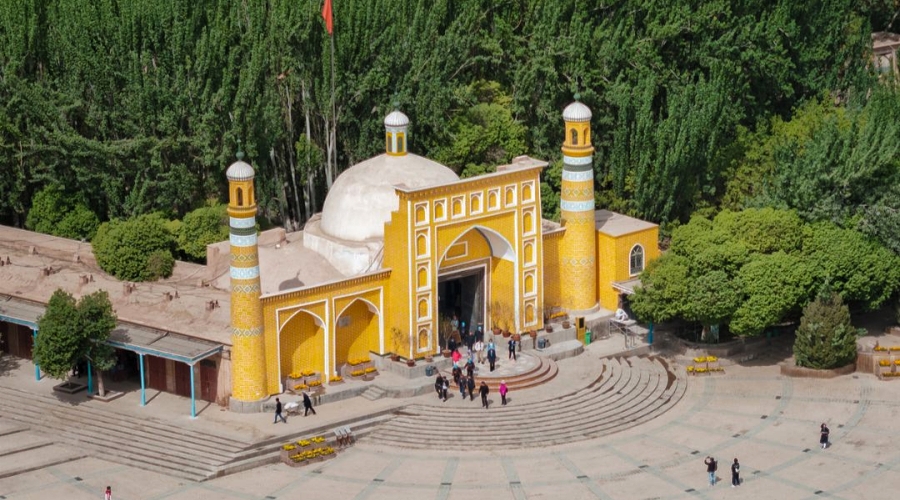
Id Kah Mosque in Xinjiang
For travelers interested in Silk Road history, Xinjiang offers a unique opportunity to see how Islam developed along ancient trade routes connecting China with Central Asia.
Quanzhou: A Historic Port City Where Islam Arrived by Sea
Quanzhou, located on China’s southeast coast, was one of the most important international trading ports during the Song and Yuan dynasties. As a major maritime Silk Road hub, the city attracted merchants from Arabia, Persia, and other regions, many of whom brought Islam to China.
The most famous Islamic site in Quanzhou is the Qingjing Mosque, one of the oldest mosques in China. Built in the 11th century following Middle Eastern architectural styles, it reflects the close connections between China and the Islamic world through maritime trade.
The city is an excellent destination for travelers interested in the maritime Silk Road and the early spread of Islam in coastal China.
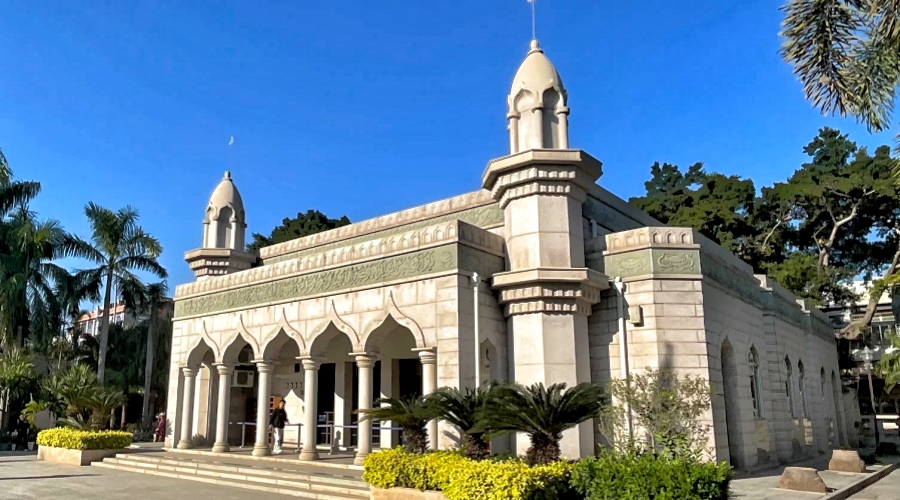
Gate of Qingjing Mosque in Quanzhou
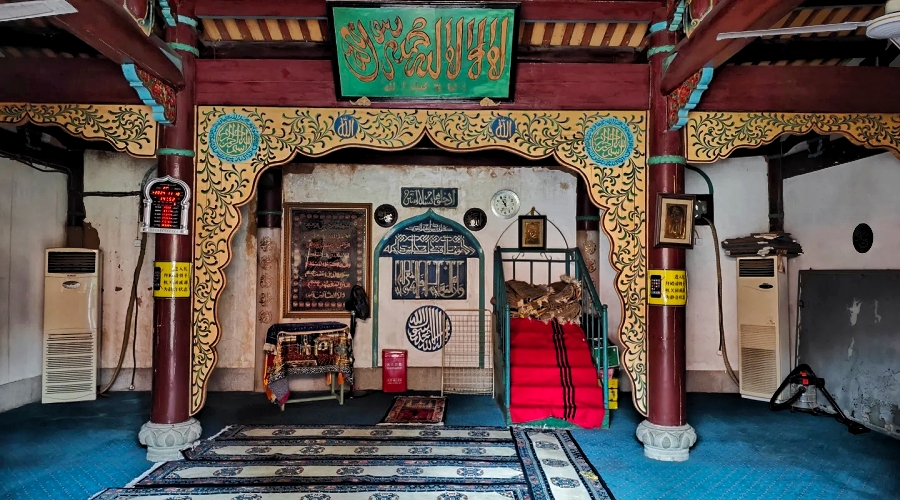
Qingjing Mosque of Quanzhou
Guangzhou: One of China’s Earliest Cities with an Islamic History
Guangzhou has been an important trading center for more than two thousand years and was one of the earliest Chinese cities to have contact with the Islamic world through maritime trade routes.
The Huaisheng Mosque is one of the oldest mosques in Guangzhou. According to historical records, the mosque dates back to the Tang Dynasty and has long served Muslim merchants and local Muslim communities.
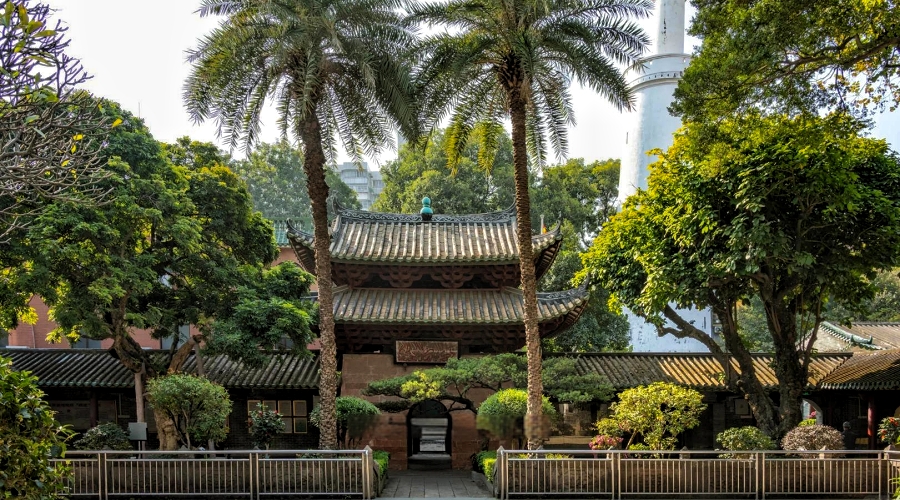
Huaisheng Mosque in Guangzhou is the oldest mosque in China
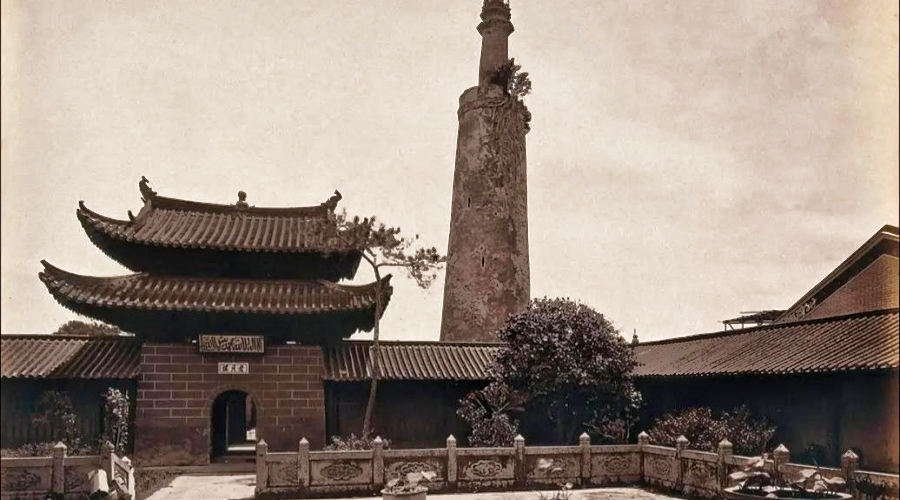
Huaisheng Mosque in Guangzhou
The mosque is famous for its traditional Chinese architectural style and its historic minaret. A visit to Huaisheng Mosque provides a chance to understand the long history of Islam in southern China.
Guangzhou also has many halal restaurants and a diverse international atmosphere, making it relatively convenient for Muslim travelers who want to combine cultural sightseeing with Muslim-friendly dining options.
Shanghai: Modern City with a Long-Established Muslim Community
Shanghai is known as a modern international city, but it also has a long history of Muslim communities and Islamic culture. Today, the city has several historic mosques that serve both local residents and visitors.
The Xiaotaoyuan Mosque is one of the most well-known mosques in Shanghai. Located in the Huangpu District, it has played an important role in the city’s Muslim community for many years.
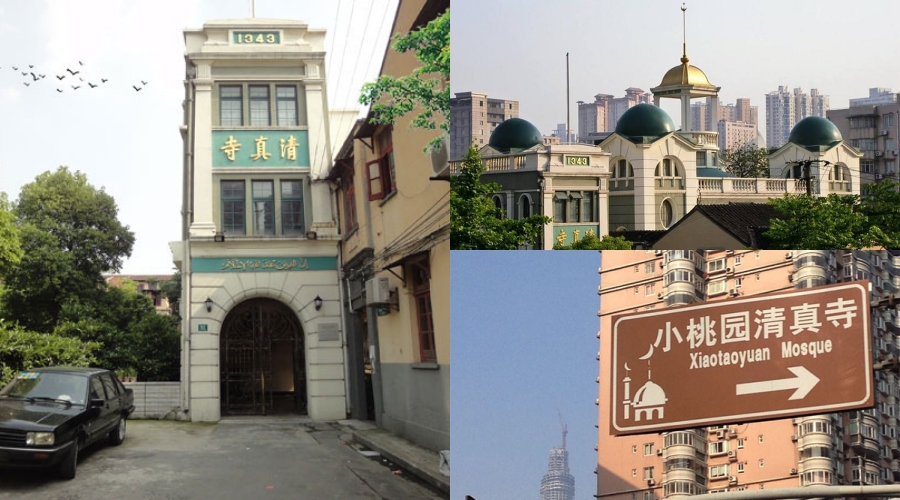
Shanghai Xiaotaoyuan Mosque
Another notable mosque is the Songjiang Mosque, one of the oldest mosques in Shanghai. Built during the Yuan Dynasty, it reflects the early presence of Islam in the Jiangnan region.
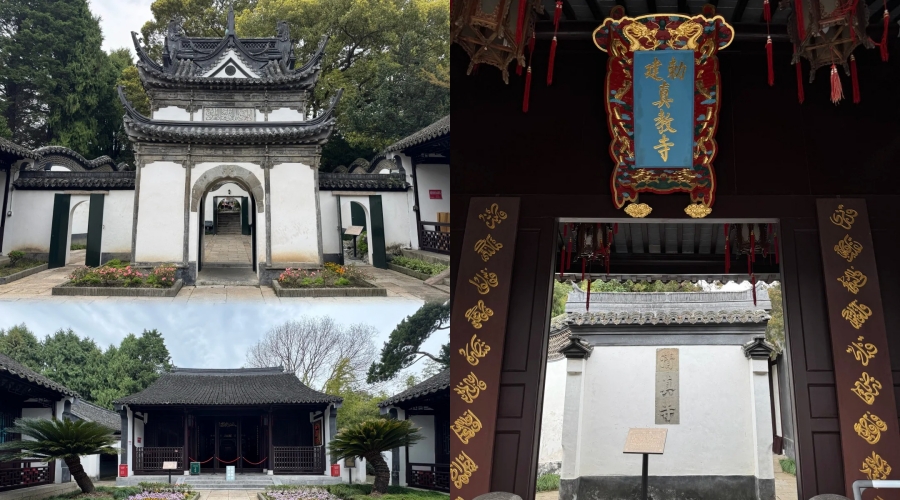
Shanghai Songjiang Mosque
The city also offers halal restaurants serving different regional cuisines from across China.
Are All Mosques in China Open to Tourists?
Many mosques in China allow foreign visitors, but access and visiting procedures can vary depending on the location, time, and local management.
Some historic mosques in major tourist cities have become cultural attractions where visitors can enter and take photos in designated areas. Others remain active places of worship where visitors are expected to follow religious customs.
Before visiting, travelers should consider:
- Check whether the mosque allows sightseeing visits in advance.
- Avoid visiting during busy prayer times unless you intend to pray.
- Dress modestly, especially when entering active religious areas.
- Ask permission before taking photos of worshippers.
- Follow local instructions from mosque staff.
Showing respect is one of the most important things when visiting religious sites.
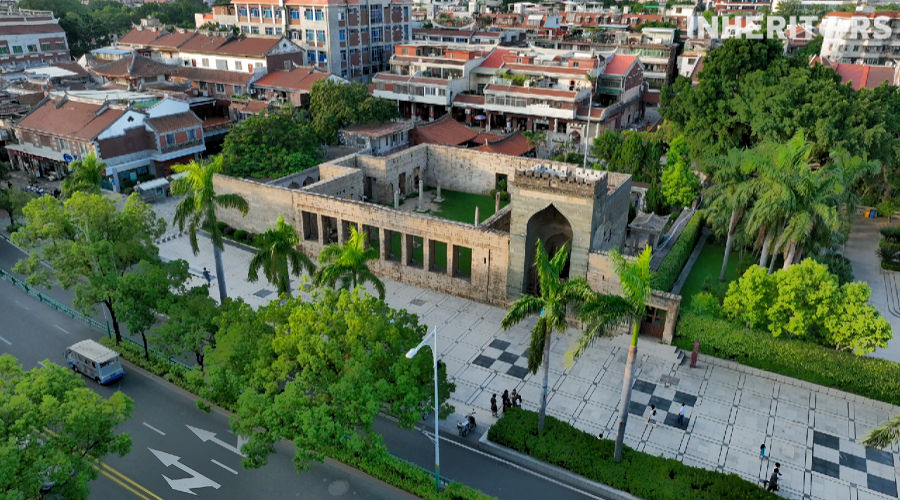
Quanzhou Qingjing Mosque
Do I Need a Guide to Visit a Mosque in China?
A guide is not always necessary, especially for famous mosques in cities such as Xi’an or Beijing. Independent travelers can often visit independently by following local rules and checking opening and entrance information.
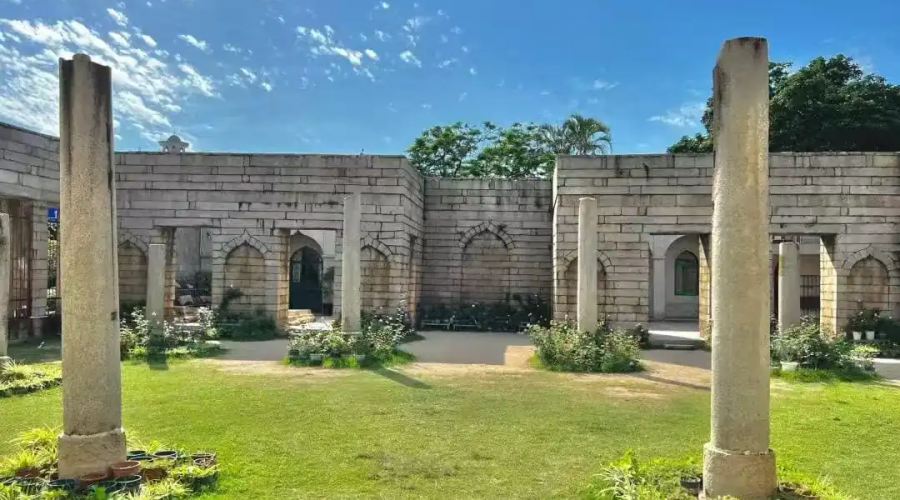
Quanzhou Qingjing Mosque
However, a guide can make the experience more meaningful, particularly for travelers who want to understand:
- The history of Islam in China
- Differences between Chinese and Middle Eastern mosque architecture
- Local Muslim communities and traditions
- The role of mosques along the Silk Road
For Muslim travelers, a local guide can also help arrange visits at suitable times and explain cultural etiquette.
What Should Muslim Travelers Know Before Visiting Mosques in China?
A mosque visit in China is generally a welcoming cultural experience, but travelers should remember that customs may differ from other countries. Useful tips include:
- Wear appropriate clothing when entering religious areas.
- Remove shoes if required before entering prayer halls.
- Keep conversations quiet inside mosque areas.
- Avoid interrupting worship activities.
- Respect local differences in religious practices.
It is also helpful to learn a few simple Chinese phrases, such as asking whether a mosque is open for visitors or where the prayer area is located.
With simple preparation, respectful behavior, and a well-planned route, mosque visits can become one of the most meaningful parts of a Muslim-friendly China journey. They offer more than religious significance—they provide a deeper understanding of China’s history, diversity, and cultural exchange along the Silk Road.