

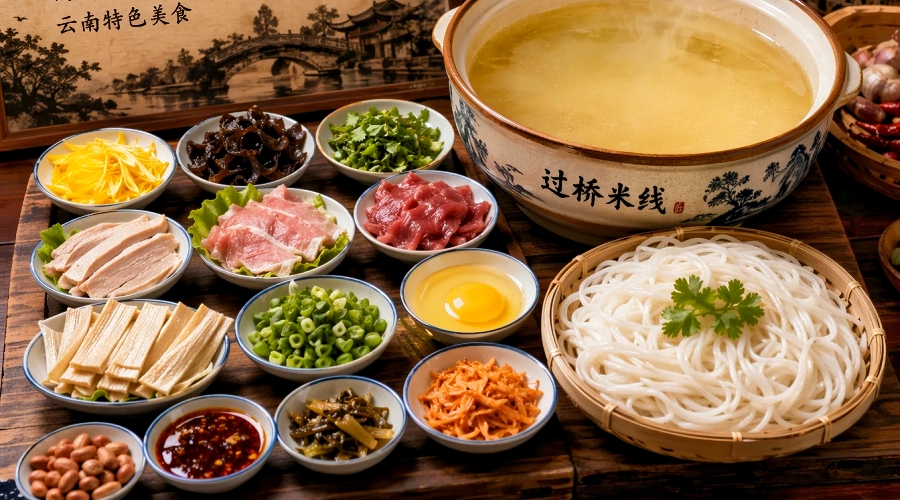
Yunnan is famous for its diverse landscapes, ethnic cultures, and unique food traditions. Beyond its well-known dishes such as crossing-the-bridge rice noodles and wild mushroom cuisine, Yunnan also has a rich halal food culture shaped by centuries of Hui Muslim communities living in the region.
Known locally as Qingzhen or sometimes simply beef cuisine (牛菜), Yunnan halal food combines traditional Muslim cooking methods with local Yunnan flavors, including fresh herbs, spicy seasonings, sour flavors, and mountain ingredients.
For Muslim travelers exploring popular destinations like Kunming, Dali, Baoshan, Lijiang, and Shangri-La, discovering authentic halal food is entirely manageable when you know what to look for. Beef, local rice products, and aromatic broths form the absolute core of this regional culinary tradition.
Halal Beef Dishes in Yunnan
Copper Pot Beef: A Signature Dish of Western Yunnan
Copper Pot Beef (铜瓢牛肉) is one of the most representative beef dishes in western Yunnan, particularly popular across the Baoshan and Dali regions. It is a traditional Muslim-style beef hot pot renowned for its rich broth, exceptionally tender meat, and the distinctive copper cooking vessel used to prepare it.
Traditionally, these copper pots were handmade by local artisans through painstaking craftsmanship. While modern techniques have made these pots more accessible today, the tradition of cooking in copper remains protected.
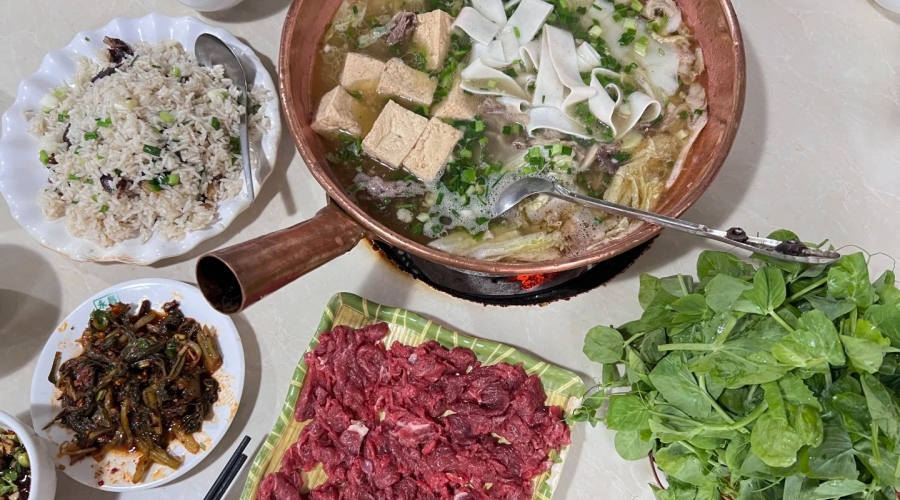
Halal Copper Pot Beef in Yunnan
The secret to this dish lies in patience and slow cooking. Local families and restaurants typically combine multiple cuts of beef, including:
- Beef leg meat for rich structure
- Beef tendon for chew and gelatin
- Beef tripe and other offal for texture
These ingredients are cleaned, blanched, and simmered for over five hours with ginger, spring onion, and salt until the meat melts on the tongue and the broth develops profound depth. Just before serving, the beef is cut into smaller portions, returned to the copper pot alongside fresh celery, mint, and local herbs.
The dipping sauce is critical to the experience. A standard regional sauce features a complex mix of coriander, spring onion, fermented bean curd, chili sauce, garlic, ginger, peanut and sesame oil, Sichuan pepper, and fresh chili. The absolute soul of this sauce is roasted chili powder. Cooks traditionally roast Erjingtiao chili peppers over charcoal ash before grinding them into a smoky, intensely fragrant powder.
Halal Beef Cold Slices and Niuba Wan
For festive gatherings and banquets, two traditional pillars stand out:
Beef Cold Slices: Tender boiled beef sliced paper-thin and served with bright, refreshing dipping sauces made of chili, coriander, mint, garlic, and soy sauce. It is lighter than heavy hot pots, making it ideal for warmer weather.
Niuba Wan (牛八碗): A traditional Hui Muslim "eight-bowl" banquet style featuring braised beef, tripe, tendon, offal, meatballs, and rich soups. It serves as a true culinary expression of community hospitality.
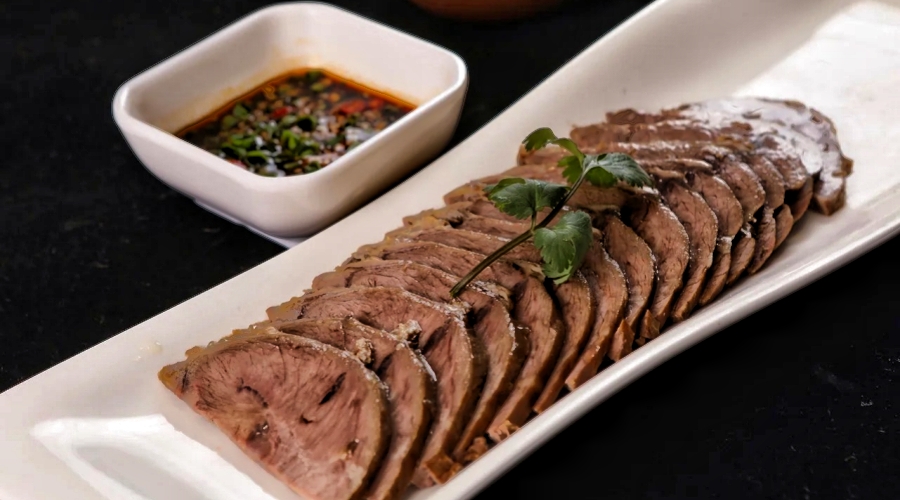
Cold Sliced Beef
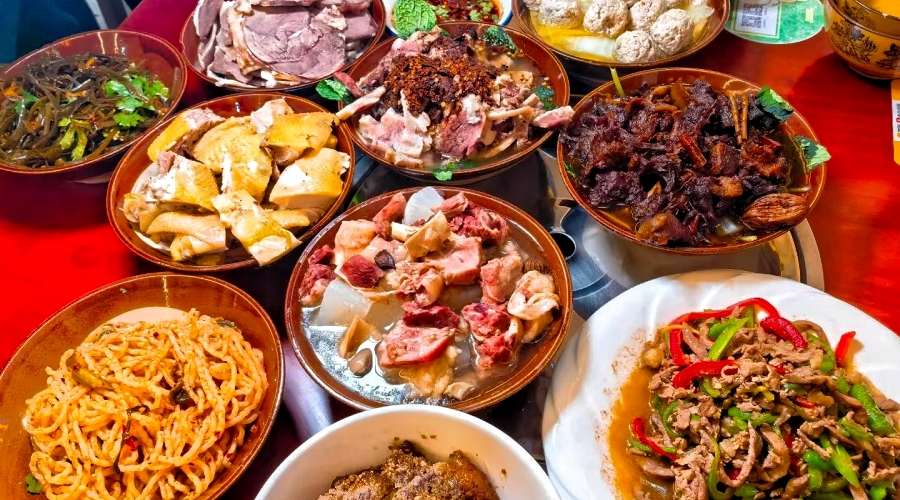
The Traditional “Eight Bowls of Beef” at Yunnan Banquets
Shadian Beef Cake
Originating from Shadian in Honghe Prefecture, one of Yunnan’s well-known Hui Muslim areas, Shadian Beef Cake is a popular local snack. It is made with:
- Minced beef
- Flour dough
- Local spices
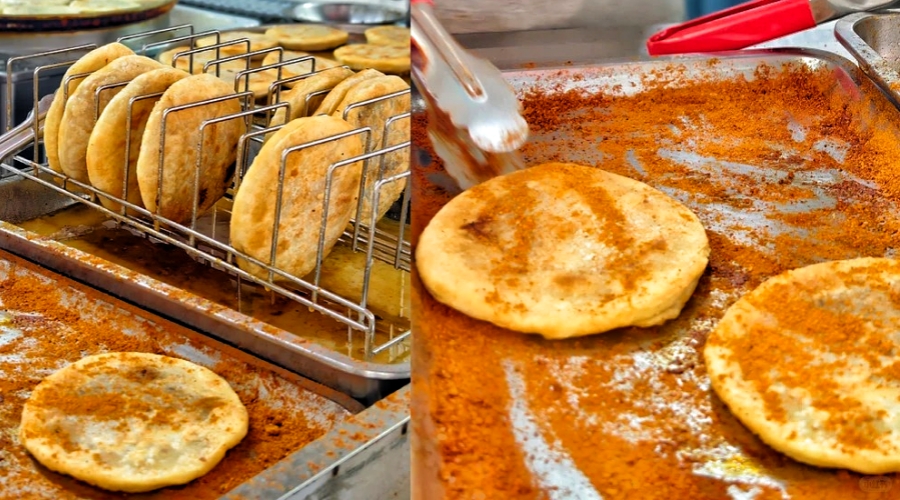
Shadian Beef Cake
The outside is crispy, while the inside is filled with savory beef flavor. It is commonly enjoyed as breakfast or a quick snack.
Halal Rice Noodles and Rice-Based Foods
Halal Beef Rice Noodles
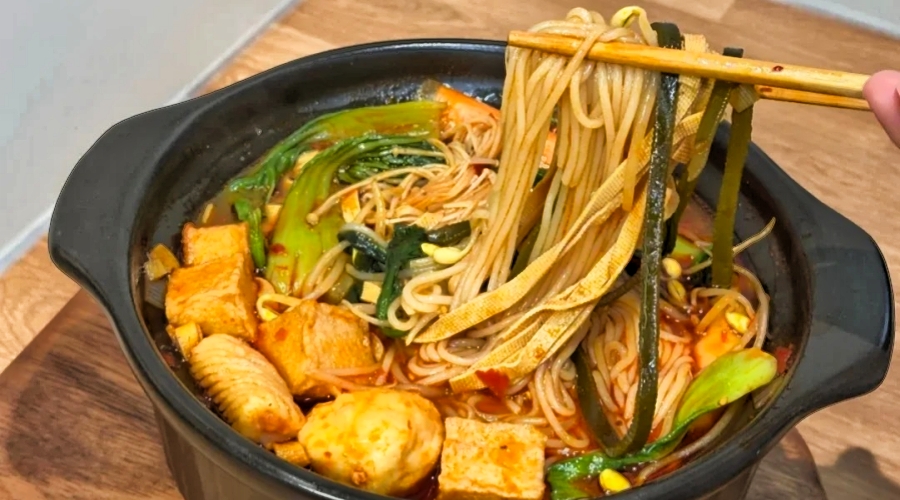
Yunnan rice noodles
Rice noodles are one of Yunnan’s most famous foods, and Muslim communities have developed their own halal versions. Halal beef rice noodles are usually prepared with:
- Beef bone broth
- Sliced beef
- Beef meatballs
- Coriander
- Mint
- Chili oil
Halal Ersi and Erkuai
Ersi and Erkuai (饵丝 / 饵块) are traditional Yunnan rice products made from steamed rice. They are popular local foods, especially in Dali and western Yunnan.
For Muslim travelers, halal erkuai and ersi offer a chance to experience traditional Yunnan food while following halal dietary requirements.
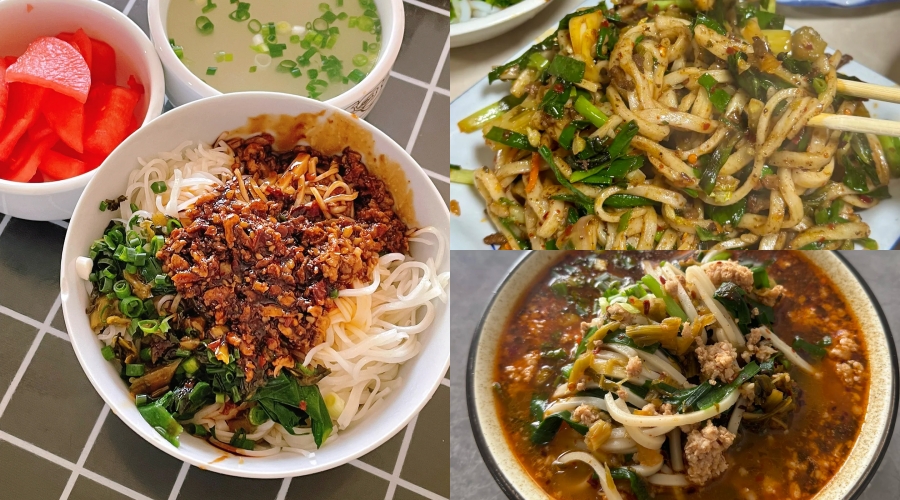
Different Styles of Ersi (Yunnan Rice Noodles)
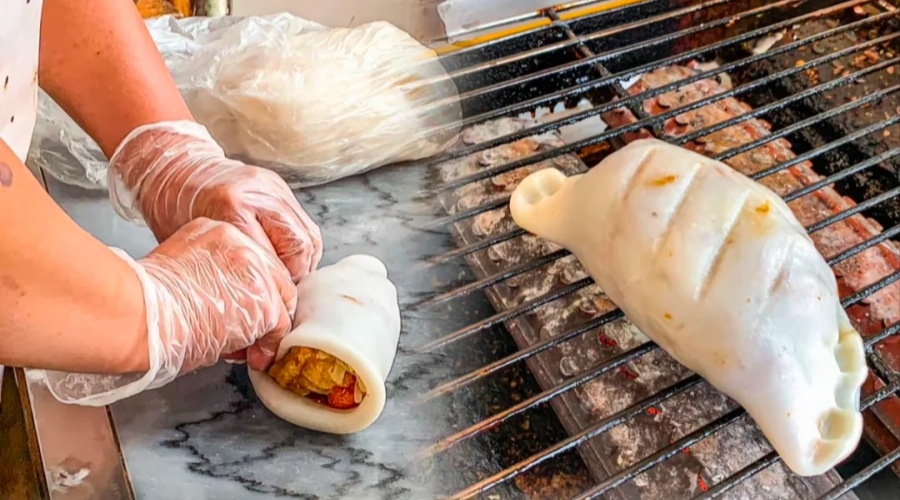
Grilled Erkuai, a traditional Yunnan rice cake stuffed with a variety of fillings.
Halal-Friendly Yunnan Specialty Foods
Halal Wild Mushroom Dishes
Yunnan is one of China’s most famous regions for wild mushrooms. Some halal restaurants combine local mushroom traditions with Muslim cooking methods. Common dishes include:
- Beef with wild mushrooms
- Beef with Termitomyces mushrooms (鸡枞菌)
- Beef with Boletus mushrooms (牛肝菌)
- Halal mushroom hotpot
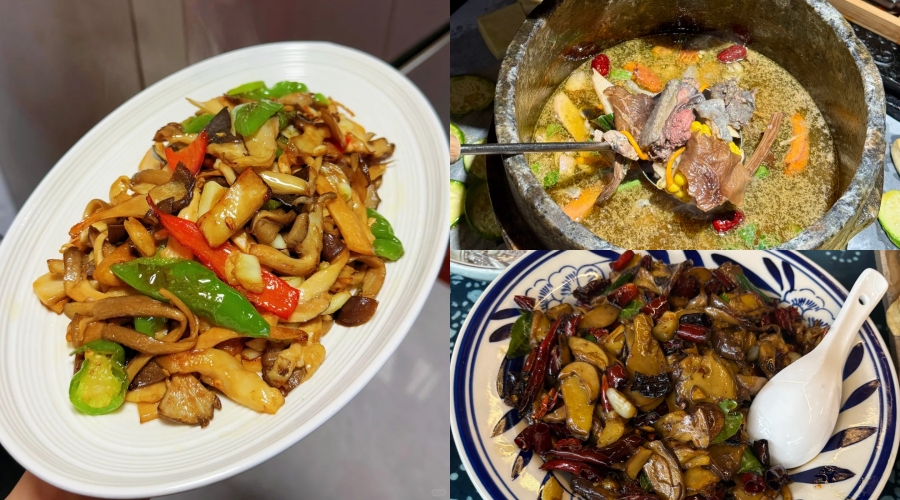
Yunnan’s diverse mushroom cuisine with different cooking methods
Choosing restaurants clearly marked Qingzhen (清真) is recommended.
Halal-Friendly Yunnan Flower Cake
Flower Cake (鲜花饼) is one of Yunnan’s most famous pastries, traditionally made with edible rose petals.
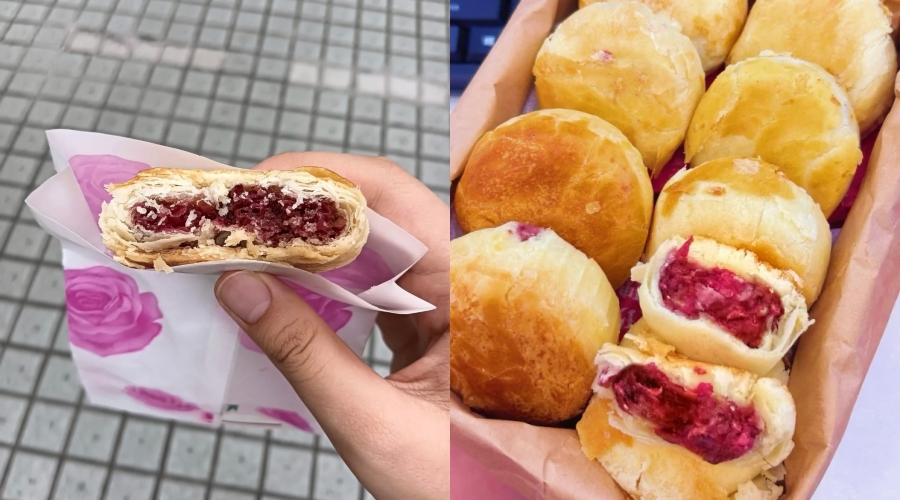
Yunnan flower cakes
Although it is not a traditional Muslim dish, some halal bakeries and Muslim restaurants offer versions made without pork-derived ingredients. It can be a convenient snack or souvenir option for Muslim travelers.
Muslim-Friendly Dishes Influenced by Dai Cuisine
Hand-Pulled Rice and Local Rice Dishes
Southern Yunnan has strong Dai and ethnic minority influences, and some Muslim restaurants offer rice dishes inspired by local traditions.
Since Dai cuisine itself is not specifically halal, travelers should confirm ingredients and preparation methods before ordering.
Tips for Muslim Travelers Finding Halal Food in Yunnan
Finding halal food in Yunnan is generally convenient, especially in larger cities and areas with Hui Muslim communities. When looking for halal restaurants:
- Look for signs marked “清真 (Qingzhen)”.
- Confirm whether dishes contain pork or pork oil.
- Ask restaurant staff about ingredients when necessary.
Useful Chinese phrases:
Is this halal?
这是清真的吗?
(Zhège shì qīngzhēn de ma?)
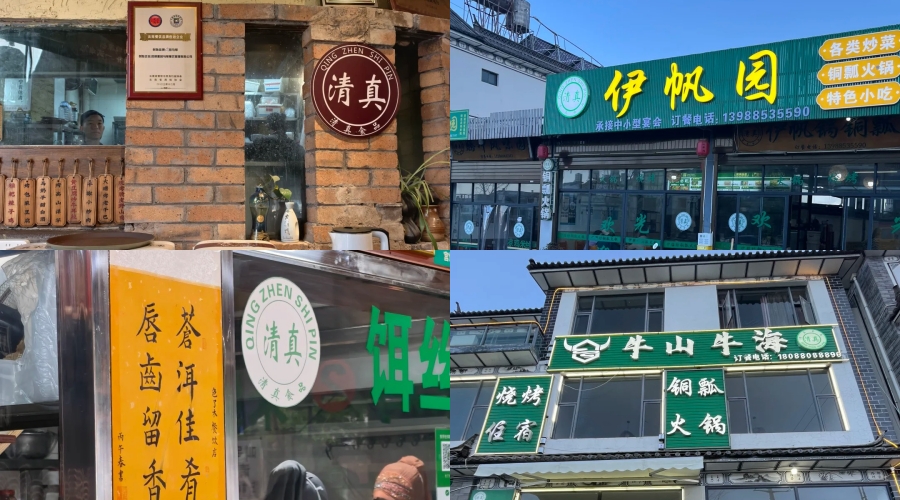
Restaurants' signs marked Qingzhen in Yunnan
Rice noodles, beef dishes, and rice-based foods are usually easy to find in halal versions. However, when eating at ordinary local restaurants, it is always better to check ingredients in advance.