

Located in northwest China, Xinjiang has been a cultural crossroads between China, Central Asia, and the ancient Silk Road for more than two thousand years. Due to its location along the trade route, the region became a meeting place for different civilizations, religions, and traditions.
Islam arrived in Xinjiang around the 10th century and gradually became an important part of local culture. Over centuries, mosques were built throughout the region, serving not only as places of worship but also as centers for education, community activities, and cultural exchange.
Today, the mosques of Xinjiang reflect a unique combination of Islamic traditions, Central Asian influences, and local architectural styles. For Muslim travelers and those interested in history, visiting Xinjiang’s mosques provides an opportunity to explore the spiritual heritage of the Silk Road.
The History of Islam and Mosques in Xinjiang
The history of Islam in Xinjiang is closely connected with the ancient Silk Road. Before Islam became influential in the region, Xinjiang was already home to many religions, including Buddhism, Zoroastrianism, and Manichaeism. Ancient cities such as Kashgar, Turpan, and Khotan were important stops for merchants, scholars, and travelers moving between East and West.
Islam began spreading in the region during the Karakhanid period, especially after the conversion of the Karakhanid rulers to Islam in the 10th century. Kashgar became one of the earliest and most important centers of Islamic learning in Central Asia.
The architecture of Xinjiang mosques often combines Islamic design elements with Chinese local features, including decorated wooden structures, brick patterns, traditional courtyards, and Central Asian-style entrances.
Famous Mosques in Xinjiang to Explore
Id Kah Mosque – Kashgar
The Id Kah Mosque, originally built in 1442, is the largest mosque in Xinjiang and one of the most important Islamic landmarks in China.
The mosque features a large yellow entrance gate, traditional courtyard layout, decorated wooden structures, and Central Asian architectural influences. Its location near Kashgar Old Town and the famous Sunday Bazaar makes it an essential stop for travelers exploring Xinjiang’s Islamic heritage.
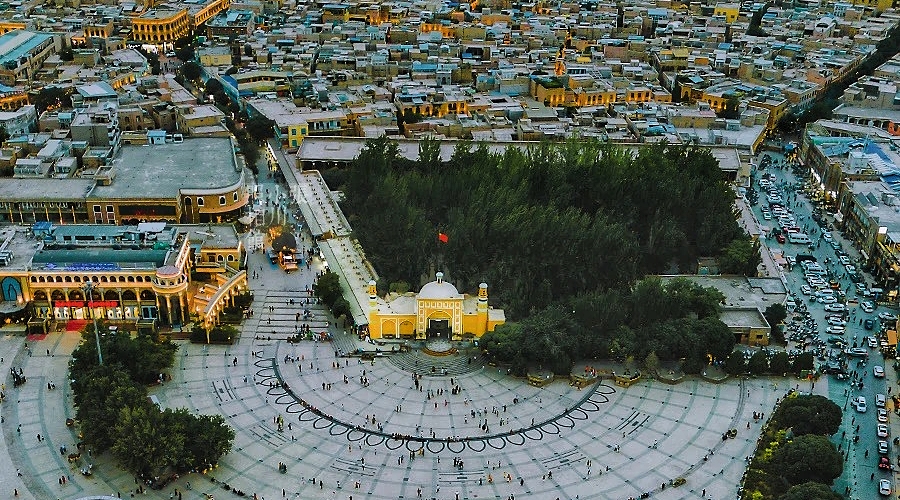
Id Kah Mosque in Xinjiang with a large yellow entrance gate
Afaq Khoja Mausoleum – Kashgar
Although primarily a mausoleum rather than a mosque, the Afaq Khoja complex is one of the most important Islamic heritage sites in Xinjiang. It is associated with Afaq Khoja, a famous religious and political figure in the history of the region.
The complex is known for its beautiful Islamic-style architecture, colorful glazed tiles, domes, and traditional courtyard design. It provides visitors with a deeper understanding of Islamic scholarship, Sufi traditions, and religious history in southern Xinjiang.
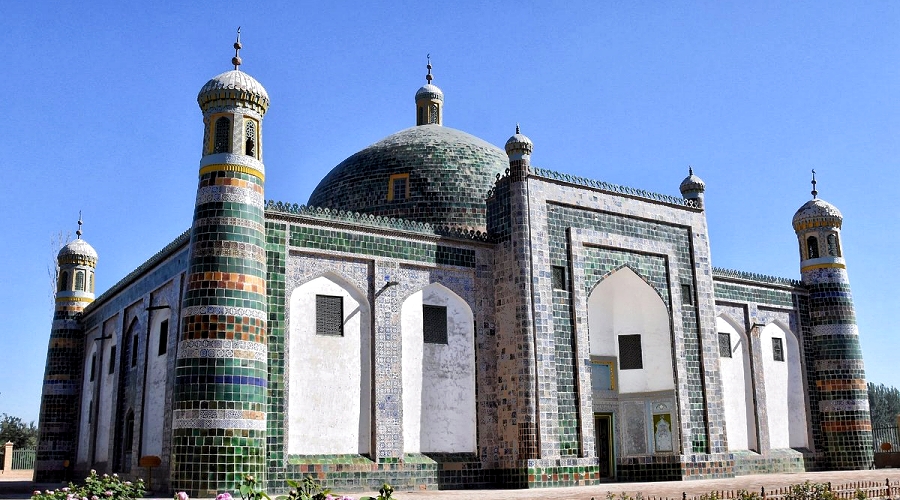
Abakh Hoja Tomb, Kashgar
Emin Mosque & Emin Minaret – Turpan
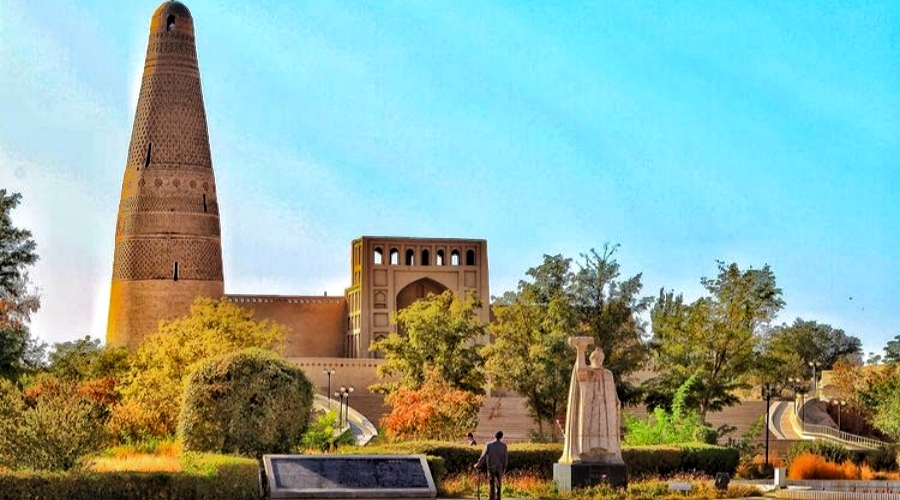
The Emin Mosque is one of the most recognizable Islamic landmarks in Turpan. Built during the Qing Dynasty, it is famous for the nearby Emin Minaret (Su Gong Ta), the tallest ancient minaret in China.
The minaret is constructed with traditional Uyghur brick techniques, featuring geometric patterns inspired by Islamic art. Unlike many large Middle Eastern-style mosques, the Emin Mosque reflects a local Xinjiang style that combines Islamic traditions with desert architecture.
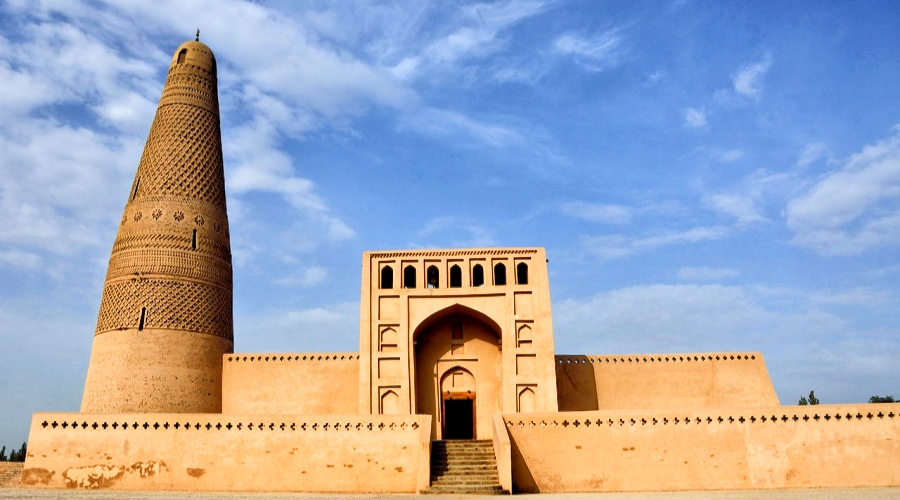
Emin Minaret and Su Gong Ta Mosque, Turpan
Juma Mosque – Kashgar
Juma Mosque, also known as the Friday Mosque, represents the close relationship between religion and daily life in Kashgar’s traditional neighborhoods.
Compared with Id Kah Mosque, it is smaller and more connected with local community life. Its architecture reflects the traditional mosque style found throughout southern Xinjiang, with prayer halls, courtyards, and decorative wooden elements.
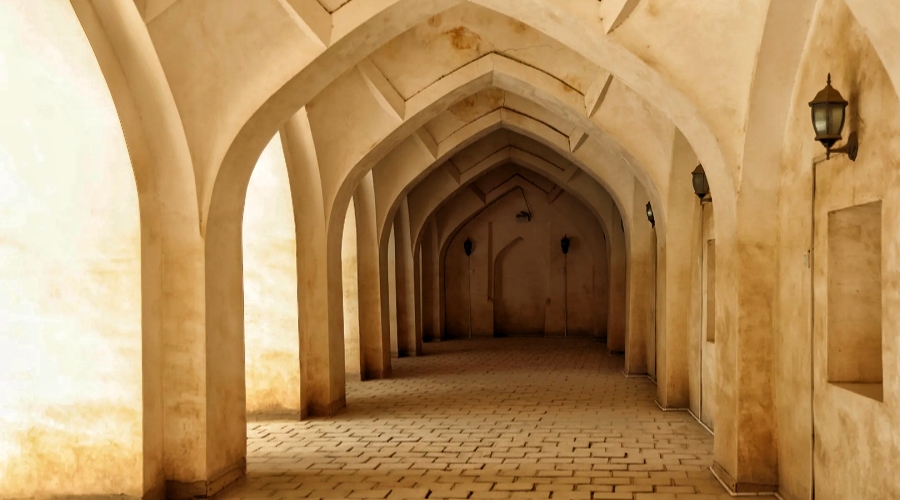
Interior view of Kashgar Juma Mosque
Juma Mosque of Yarkand – Yarkand (Shache)
Yarkand was once one of the most important kingdoms along the southern Silk Road. Its mosques reflect the city’s historical importance as a center of trade, literature, and Islamic culture.
The Juma Mosque in Yarkand represents the architectural traditions of southern Xinjiang, combining Islamic design with local Uyghur craftsmanship.
Travelers visiting Yarkand can also explore traditional streets, handicraft workshops, and historical sites connected with the ancient Silk Road.
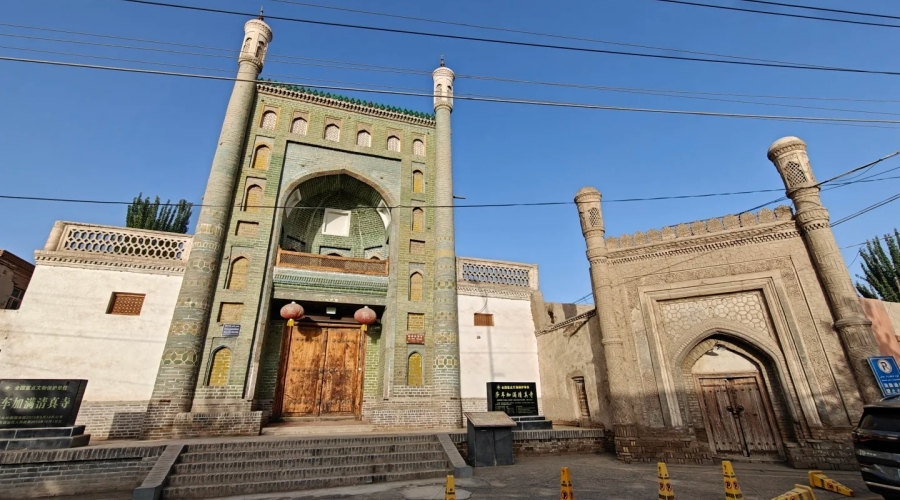
Juma Mosque of Yarkand
Keriya Mosque – Keriya (Yutian)
Keriya is a historic oasis area south of the Taklamakan Desert. Local mosques here reflect the traditional religious architecture of southern Xinjiang’s rural communities.
For travelers exploring the southern Silk Road route, including Hotan and Kashgar, Keriya provides insight into the connection between desert settlements and Islamic culture.
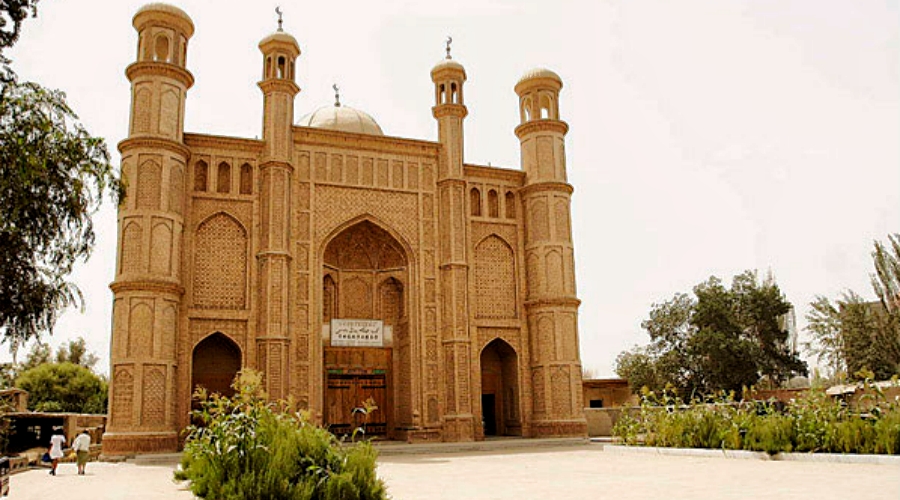
Keriya Mosque in Yutian
Aksu Old Mosque – Aksu
Aksu was an important stop on the northern branch of the Silk Road. The city’s mosques represent the spread of Islam through the Tarim Basin and the development of Muslim communities in central Xinjiang.
The region is less visited compared with Kashgar, but it offers travelers a chance to discover a quieter side of Xinjiang’s cultural heritage.
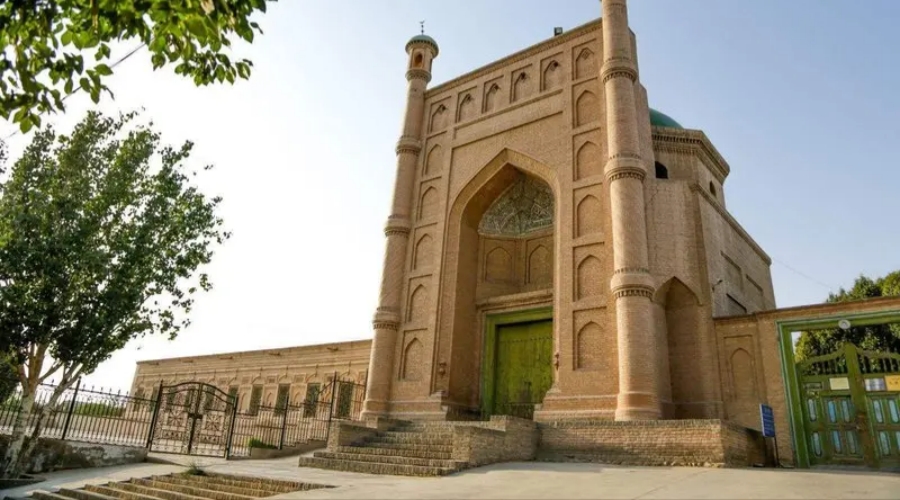
Aksu Old Mosque (also named Kuche Grand Mosque)
Shaanxi Grand Mosque – Urumqi
Located in central Urumqi, the Shaanxi Grand Mosque is one of the oldest mosques in the city and an important symbol of the capital’s Muslim heritage.
It features a distinctive traditional Chinese palace-style design. The architecture combines Islamic religious functions with classic Chinese elements, including grey-tiled roofs, upturned eaves, carved wooden beams, and elegant courtyard layouts.
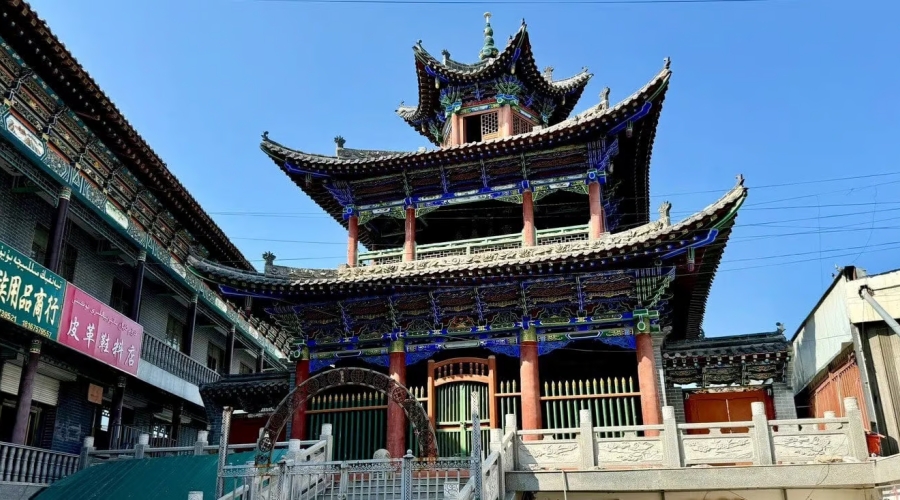
Shaanxi Grand Mosque in Urumqi
Yanghang Mosque – Urumqi
Also known as the Tatar Mosque, Yanghang Mosque was built in 1897 and is one of the most distinctive mosques in Urumqi.
Unlike many mosques in Xinjiang that feature Chinese-style architecture, Yanghang Mosque presents a more Central Asian Islamic architectural style. Its design is relatively simple and elegant, with a restrained appearance that reflects the traditions of Tatar Muslim communities who historically lived in the region.
Located near the famous International Grand Bazaar, the mosque is a convenient stop for travelers exploring Urumqi’s cultural neighborhoods.
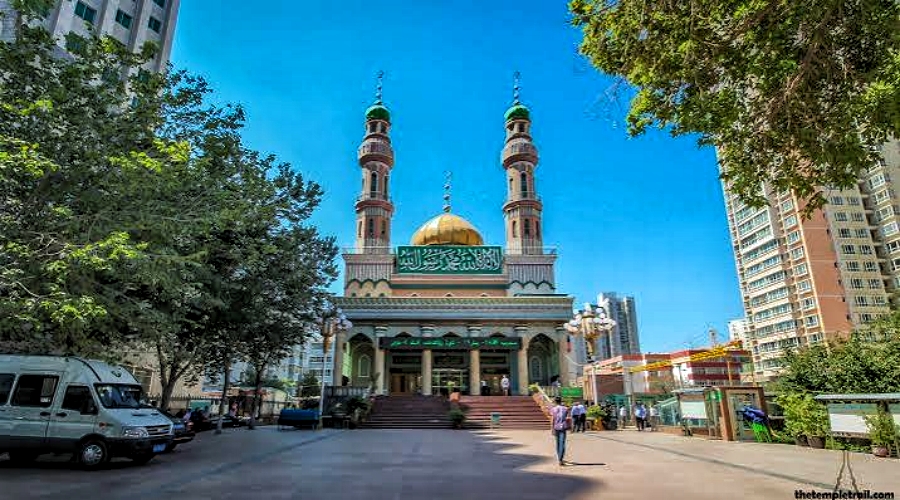
Yanghang Mosque in Urumqi
Shaanxi Grand Mosque of Yining – Yining
The Shaanxi Grand Mosque of Yining, also known as the Hui Grand Mosque, is one of the oldest and best-preserved Chinese-style mosques in Xinjiang.
Originally built in 1760, the mosque has a history of more than 260 years. Its architectural layout follows the style of traditional Chinese mosques, influenced by famous examples such as the Great Mosque of Xi'an.
One of its most impressive features is the prayer hall and the four-story octagonal pavilion-style tower, which combines Chinese wooden architectural techniques with Islamic religious functions.
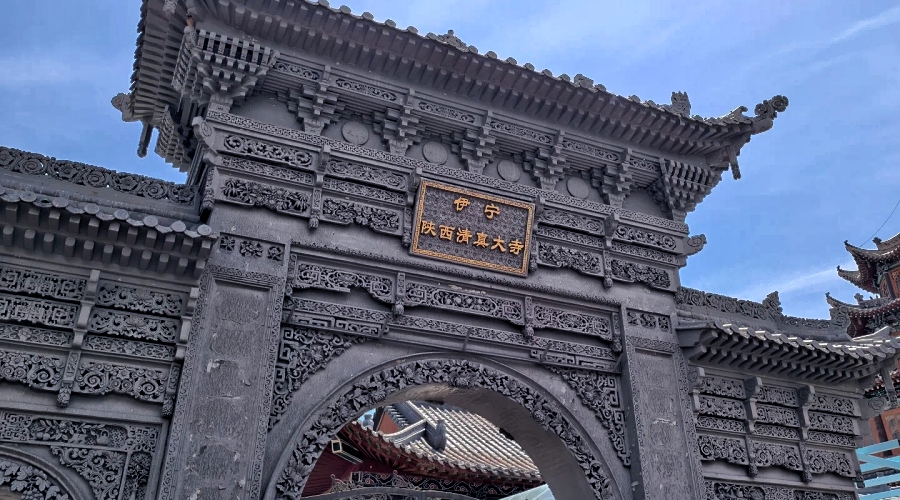
Shaanxi Grand Mosque of Yining
Jiefang South Road Mosque – Yining
Built in 1773, the Jiefang South Road Mosque is another important historic mosque in Yining.
The mosque is particularly famous for its Qing Dynasty-era minaret, which features a traditional Chinese three-tiered pointed roof design. The wooden structure and delicate craftsmanship reflect the influence of classical Chinese architecture.
Compared with many Islamic buildings featuring Middle Eastern-style domes and arches, this mosque demonstrates the unique architectural character of Xinjiang’s Chinese Muslim communities, where religious buildings often integrated local construction traditions.
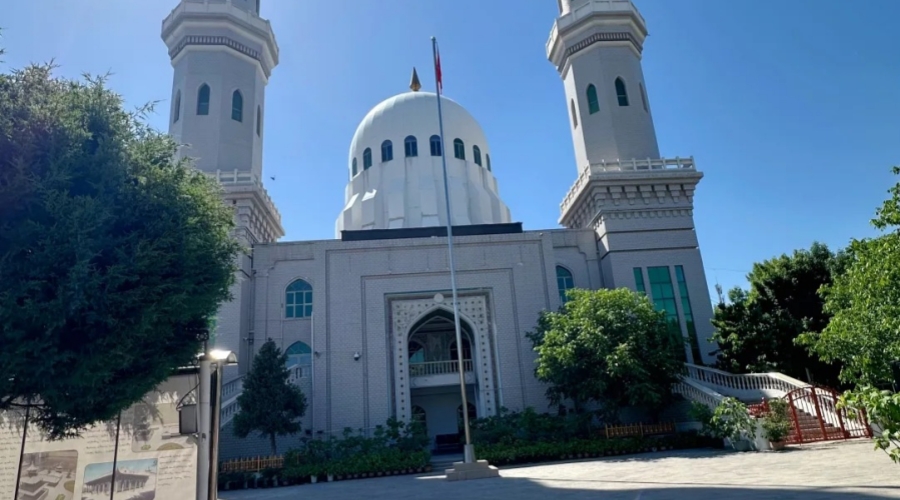
Jiefang South Road Mosque in Yining
Xinjiang Mosque Architecture: A Unique Cultural Combination
The mosques of Xinjiang are different from many other Islamic buildings around the world because they reflect the region’s unique geography and history.
Common architectural features include:
- Large entrance gates: Many Xinjiang mosques have impressive gateways decorated with traditional patterns.
- Courtyard layouts: Many mosques use open courtyards suitable for large community gatherings.
- Brick and wooden decorations: Local craftsmanship can be seen in detailed carvings and decorative designs.
- Central Asian influences: Architectural styles show connections with neighboring regions such as Central Asia and the wider Islamic world.
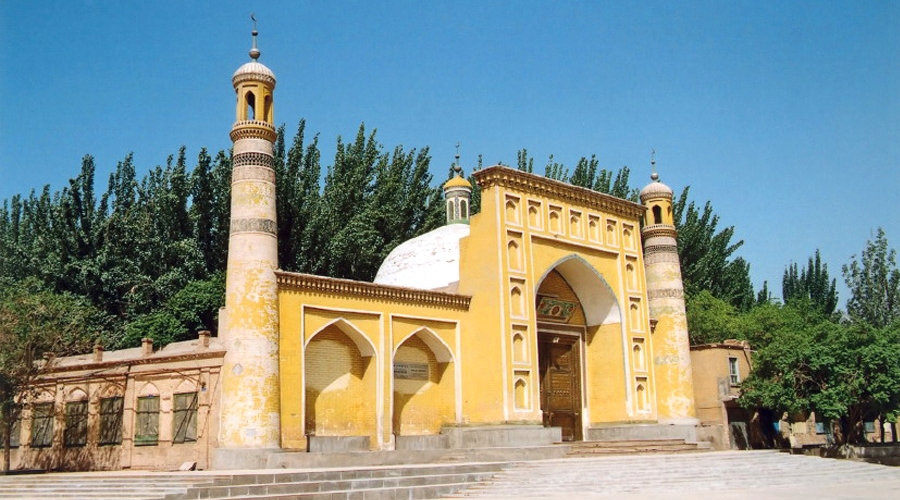
Id Kah Mosque in Kashgar city, Xinjiang
Unlike some Middle Eastern mosques that emphasize large domes and minarets, Xinjiang mosques often highlight horizontal layouts, decorated entrances, and integration with local urban environments.
Travel in Xinjiang Tips for Visitors
Respect Local Religious Customs
Mosques in Xinjiang are active religious sites, not only tourist attractions. Visitors should dress modestly, avoid disturbing worshippers, and follow local guidelines when entering mosque areas.
During prayer times or religious festivals, some areas may have limited access. Travelers should always respect local customs and the instructions of mosque staff.
Best Places to Experience Islamic Culture in Xinjiang
For travelers interested in Islamic heritage, the best destinations include:
- Kashgar: The center of Xinjiang’s Islamic history, with Id Kah Mosque, the old city, and traditional bazaars.
- Hotan: A historic southern Silk Road city with strong local traditions.
- Turpan: An ancient oasis destination where different cultures met along the Silk Road.
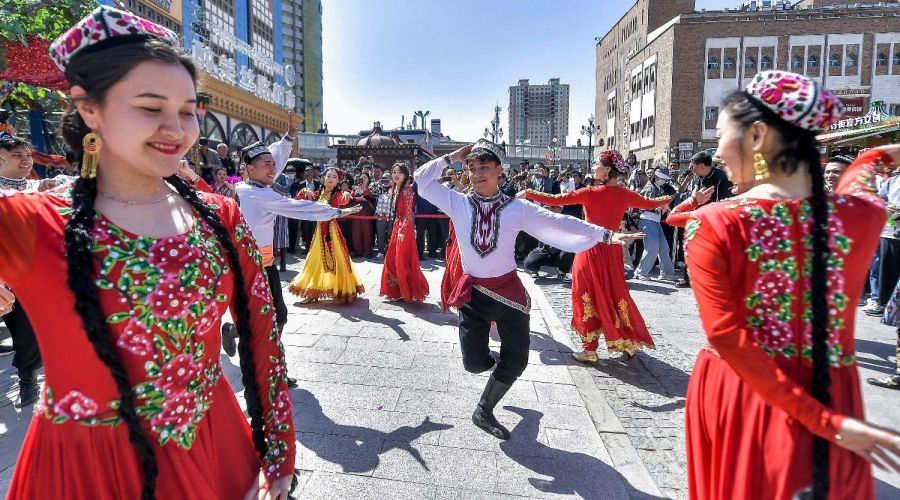
A vibrant Uyghur wedding celebration in Xinjiang
A Xinjiang journey is often combined with other Silk Road destinations such as Dunhuang, Zhangye, and Xi’an to understand the broader history of cultural exchange in China.
The Importance of Xinjiang Mosques in China’s Cultural Heritage
The mosques of Xinjiang represent more than religious buildings. They are historical witnesses to the movement of people, ideas, and traditions across the Silk Road.
Through their architecture, local communities, and historical stories, these mosques show how Islamic culture developed within China’s diverse cultural landscape.
For Muslim travelers, Xinjiang offers a unique opportunity to explore Islamic heritage while discovering ancient cities, desert landscapes, traditional markets, and Silk Road history.