

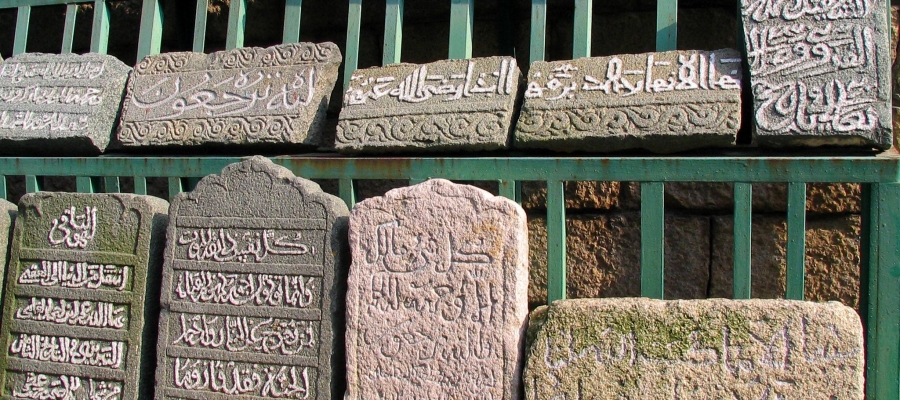
Many first-time visitors are surprised to learn that Muslim communities have been part of China's cultural landscape for over 1,300 years, with roots dating back to the ancient Silk Road. Today, China is home to an estimated 20–30 million Muslims, representing several ethnic groups with long-established cultural traditions. Muslim communities can be found throughout the country, with larger populations concentrated in Northwest China, including Xinjiang, Ningxia, Gansu, Qinghai, and parts of Shaanxi.
These communities contribute to China's cultural diversity through distinctive architecture, halal cuisine, handicrafts, and local customs. For travelers interested in exploring beyond China's famous landmarks, destinations with strong Muslim heritage offer a unique perspective on the country's history and cultural traditions.
The Origins of Muslim Communities in China
The development of Muslim communities in China is closely linked to two major historical routes: the Maritime Silk Road and the overland Silk Road.
Maritime Silk Road
During the Tang Dynasty (618–907), Arab and Persian merchants arrived in port cities such as Guangzhou and Quanzhou, where many settled and formed some of China's earliest Muslim communities, often known as "Fan Fang" (foreign merchant quarters). Historic landmarks such as Huaisheng Mosque and Qingjing Mosque continue to reflect this vibrant era of maritime trade and cultural exchange.
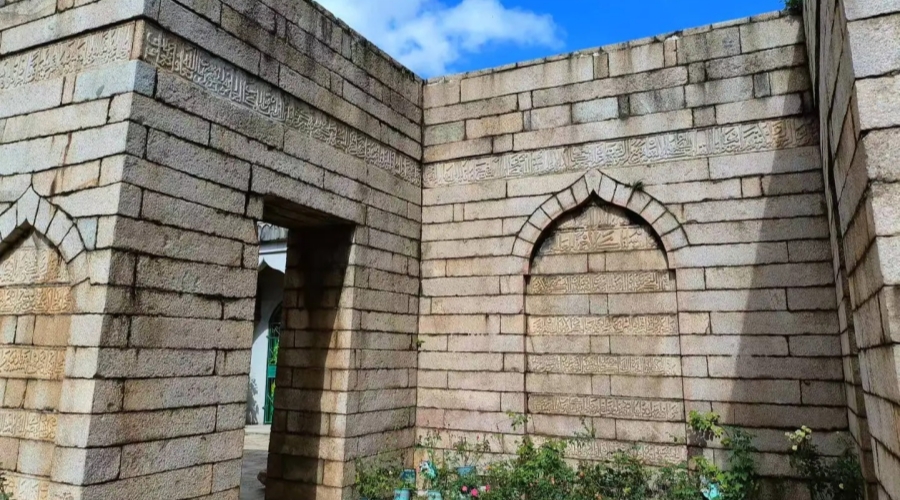
Ancient stone walls with Arabic Quranic inscriptions at Quanzhou's Qingjing Mosque
Overland Silk Road
During the Yuan Dynasty (1271–1368), merchants and settlers from Central and West Asia arrived in Northwestern China via the Silk Road. Over time, many integrated with local populations, contributing to the formation of the Hui ethnic group, while communities such as the Uyghurs preserved their own Islamic traditions. Regions including Xinjiang, Ningxia, Gansu, and Qinghai became important centers of China's Muslim communities.
Today, Muslim communities can be found across nearly every province in China. Their settlement pattern is often described as "widely dispersed but locally concentrated," with many communities historically developing around mosques and forming distinctive neighborhoods.
Major Regions of Muslim Communities in China
Muslim communities can be found across China, but several regions are particularly known for their long-established cultural heritage, historic neighborhoods, and distinctive local traditions.
Northwest China: The Heartland of Muslim Culture
Northwest China is home to some of the country's largest and most historically significant Muslim communities. For centuries, this region served as a key section of the Silk Road, connecting China with Central Asia and beyond. For travelers, this is the best place to experience China's most visible Muslim heritage.
Important destinations include:
- Xi'an
- Lanzhou
- Xining
- Yinchuan
- Kashgar
- Linxia
The region is particularly known for its hearty cuisine, including hand-pulled noodles, lamb dishes, pilaf, and freshly baked flatbreads, making it a favorite destination for food-focused travelers.
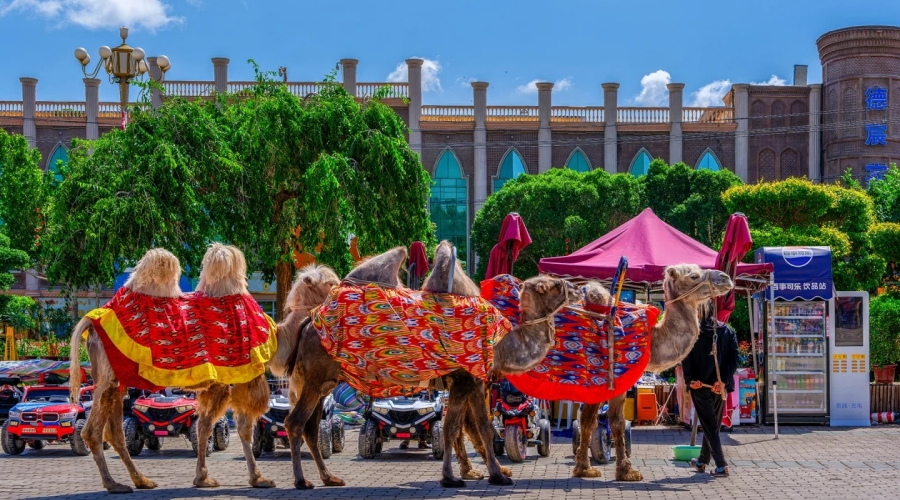
The Old City of Kashgar in Southern Xinjiang
Eastern Coastal China: Legacy of the Maritime Silk Road
Some of China's oldest Muslim communities actually developed along the southeastern coast. Historic port cities such as Guangzhou and Quanzhou welcomed merchants from Arabia, Persia, and other regions for centuries through the Maritime Silk Road. These trading connections helped establish some of China's earliest mosques and multicultural communities.
Notable destinations include:
- Guangzhou
- Quanzhou
- Hangzhou
- Ningbo
Today, visitors can explore some of China's oldest mosques while discovering a fascinating blend of Chinese coastal culture and international maritime history.
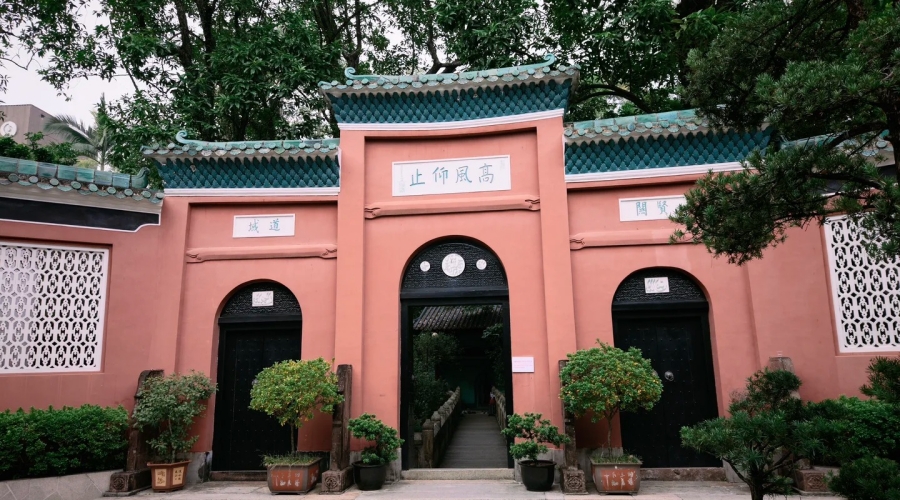
Guangzhou Xianxian Mosque
Southwest China: Diverse Ethnic Cultures
Compared with the famous Silk Road cities, Southwest China offers a lesser-known perspective on Muslim culture.
Communities that have developed distinctive local traditions influenced by the region's diverse ethnic cultures and mountain landscapes.
Key destinations include:
- Kunming
- Dali
- Shadian
- Guiyang
Travelers visiting this region often encounter a unique fusion of Northwest Muslim culinary traditions and Yunnan's renowned food culture, creating flavors and customs that differ from those found elsewhere in China.
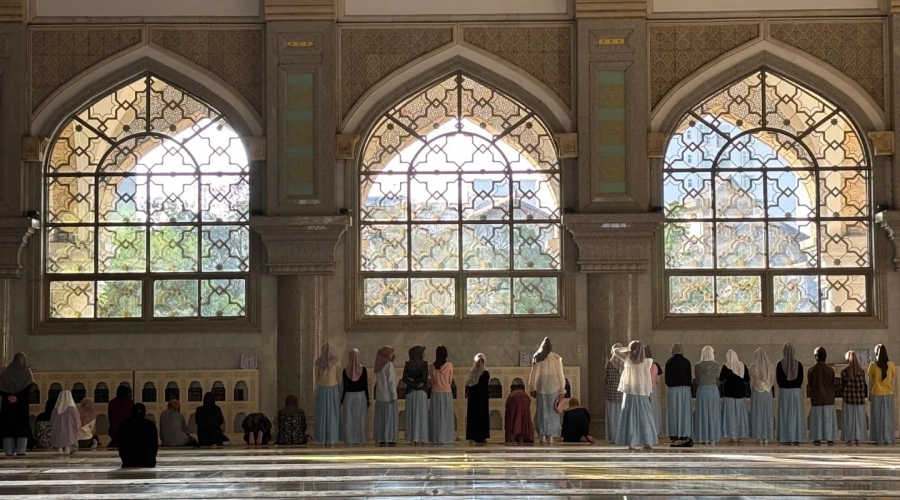
Women gather for prayer inside the grand hall of Shadian Grand Mosque in Yunnan
Northern China: Historic Communities in Major Cities
Northern China has a long history of Muslim settlement, particularly in important political and commercial centers.
Beijing's Niujie district remains one of the country's best-known historic Muslim neighborhoods and continues to attract visitors interested in local culture and halal cuisine.
Major destinations include:
- Beijing
- Tianjin
- Baoding
These communities developed within China's imperial heartland, resulting in architecture, cuisine, and traditions that reflect a close integration with northern Chinese culture.
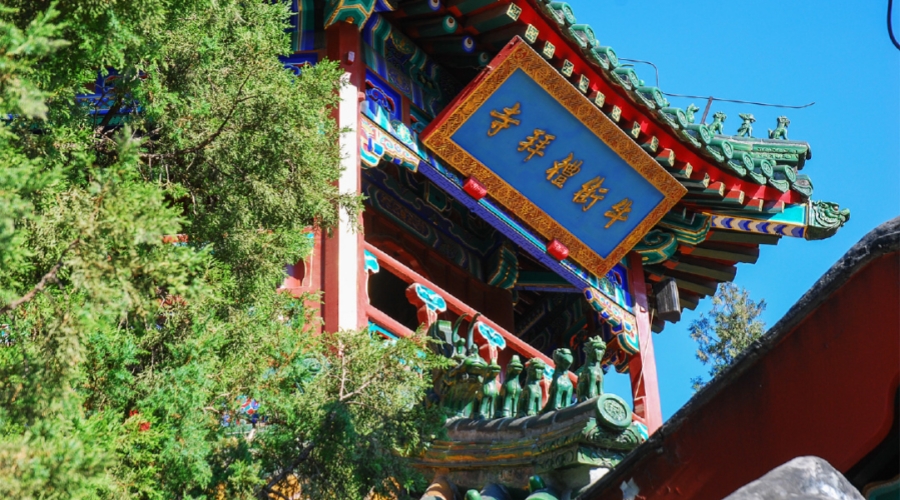
Niujie Mosque, Beijing's oldest mosque, is a historic center of Islamic culture and worship for the local Muslim community
Modern Muslim Communities in China's Major Cities
Today, Muslim communities can be found throughout China's largest metropolitan areas, including Shanghai, Shenzhen, Chengdu, and Chongqing.
Although these cities may not have the long-established Muslim heritage of Xi'an or Kashgar, they offer growing numbers of halal restaurants, cultural centers, and mosques that serve both local residents and international visitors.
For travelers, this means that Muslim-friendly services are increasingly accessible across much of modern China.
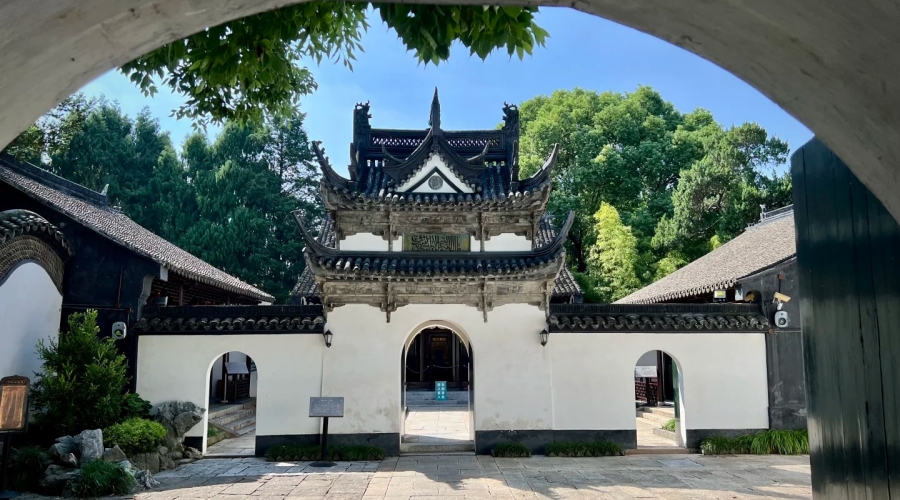
Shanghai Songjiang Mosque
Cultural Influences and Traditions
Muslim communities have shaped China's cultural landscape for centuries, blending Islamic heritage with local traditions. Their influence is reflected in architecture, cuisine, and daily life, offering visitors a unique glimpse into China's cultural diversity.
Distinctive Architecture
Many historic mosques in China differ significantly from those found elsewhere in the world.
Instead of large domes and towering minarets, traditional Chinese mosques often feature:
- Courtyard layouts
- Wooden structures
- Curved rooflines
- Classical Chinese design elements
These buildings reflect centuries of cultural exchange and adaptation.
Regional Halal Cuisine Across China
Food is one of the most accessible ways to experience Muslim culture in China. Each region has developed its own culinary identity:
- Xi'an: rich wheat-based dishes such as lamb soup with flatbread
- Gansu: hand-pulled noodles and beef broth traditions
- Xinjiang: grilled lamb, pilaf, and naan-style bread culture
- Ningxia & Qinghai: hearty stews and lamb-based home cooking
- Yunnan: fusion-style halal dishes influenced by local ingredients
Beyond individual dishes, food markets and halal restaurants often serve as important gathering places within local communities.
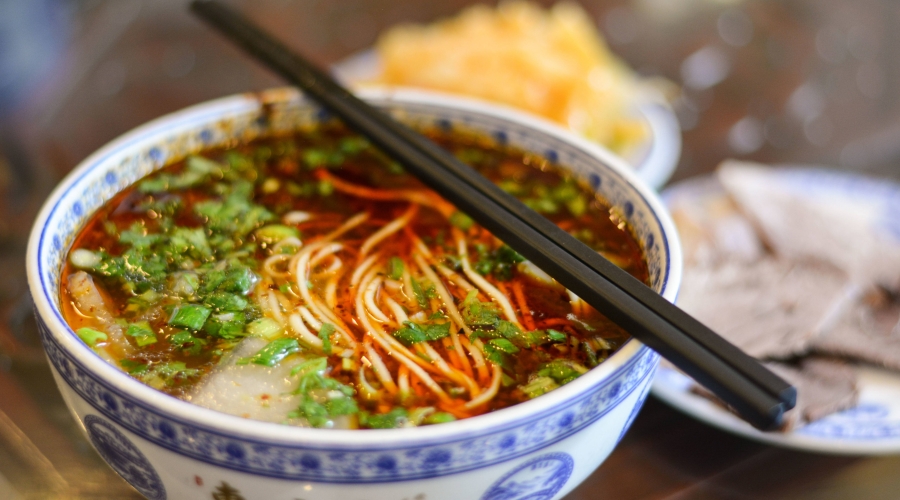
Lanzhou Hand-pulled Noodles
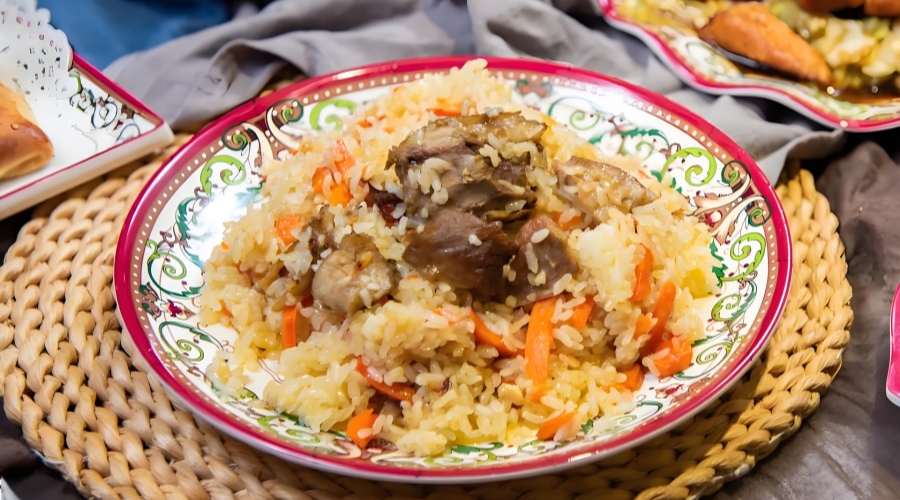
Xinjiang Pilaf
Festivals and Community Life
Many Muslim communities in China maintain vibrant cultural traditions that can be experienced through local festivals, neighborhood gatherings, food markets, and family celebrations.
During major holidays such as Eid al-Fitr and Eid al-Adha, some historic Muslim districts become especially lively, with families gathering, markets becoming busier, and communities coming together to celebrate.
Visitors traveling during these periods may notice a festive atmosphere in places such as:
- Xi'an Muslim Quarter
- Beijing's Niujie District
- Kashgar Old Town
- Linxia Old City
Even outside festival periods, local markets, traditional bakeries, and community neighborhoods offer visitors opportunities to experience the daily life and cultural traditions of China's Muslim communities.
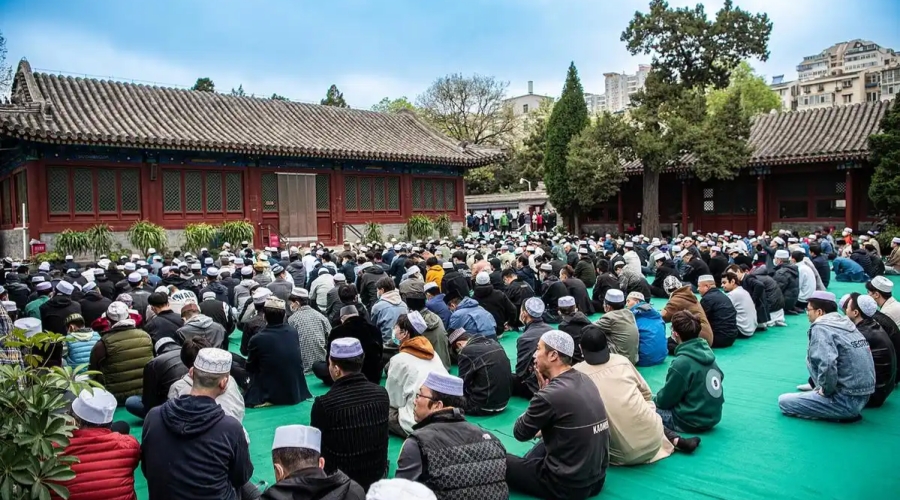
Eid al-Fitr celebrations at Niujie Mosque in Beijing
Practical Tips for Visiting Muslim Communities in China
When exploring Muslim communities across China, a little preparation can help make your journey smoother and more enjoyable. Here are some practical travel tips:
Look for the “Qingzhen (清真)” Sign
The most reliable way to identify halal restaurants in China is to look for the Chinese characters "清真" (Qingzhen) displayed on storefronts or menus. This indicates that the food follows halal preparation standards.
Choose Accommodation Near Cultural Districts
Staying near well-known cultural areas such as:
- Xi'an Muslim Quarter
- Beijing Niujie District
- Kashgar Old Town
- Lanzhou city center
can make it easier to access halal food, mosques, and local attractions within walking distance.
Halal Food Is Easier in Key Cities
Halal dining is widely available in cities with long-established Muslim communities, especially in:
- Xi'an
- Beijing
- Lanzhou
- Xining
- Kashgar
- Yinchuan
In major cities like Shanghai or Chengdu, halal options are also growing but may be more spread out.
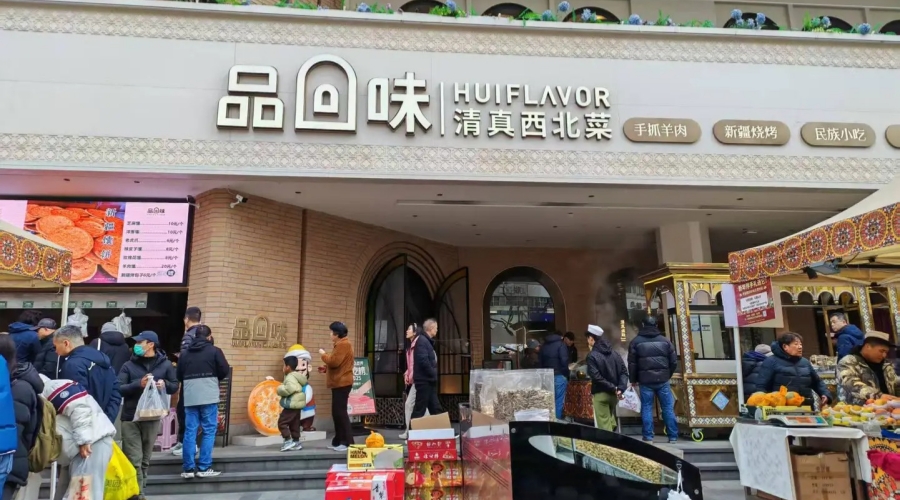
Shanghai Halal Restaurant
Respect Local Customs at Cultural Sites
When visiting historic mosques or cultural landmarks:
- Dress modestly
- Avoid disturbing prayer times
- Ask before taking photos inside certain areas
- Follow on-site guidance and signage
Travel Beyond Main Tourist Areas
Some of the most authentic experiences can be found outside major attractions. Exploring local streets, food markets, and residential neighborhoods often reveals:
- Family-run halal restaurants
- Traditional bakeries
- Everyday community life
Exploring Muslim communities across China offers more than just historical insight—it reveals a living cultural heritage that continues to evolve in both traditional and modern settings. From the ancient Silk Road cities of Xi'an and Kashgar to the coastal heritage of Guangzhou and Quanzhou, and the growing diversity of today's major metropolitan areas, these communities reflect centuries of exchange, adaptation, and continuity.
For travelers, they provide an opportunity to experience China through a different cultural lens. Whether through architecture, cuisine, or neighborhood rhythms, each destination adds another layer to China's broader cultural story, making these journeys both meaningful and memorable.